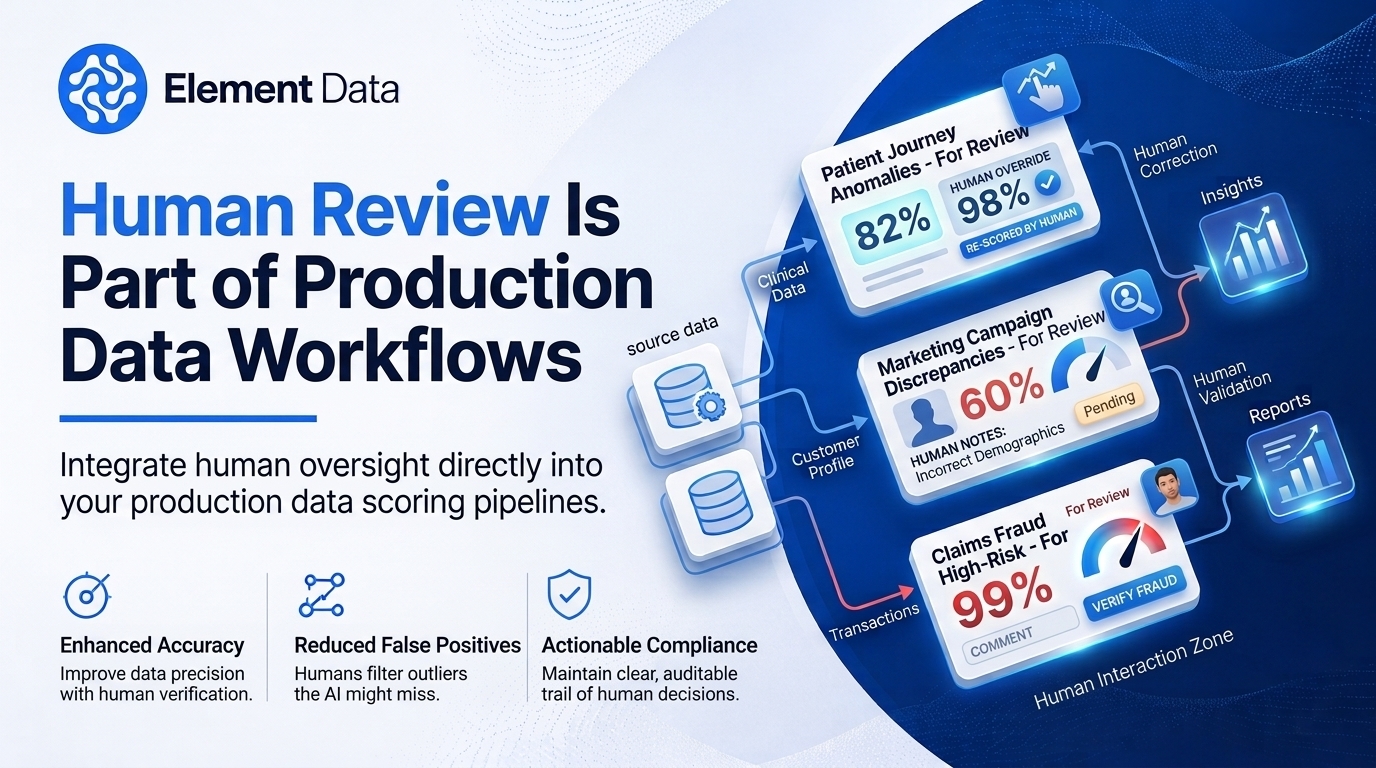
If a healthcare AI workflow needs human review, that is not a failure. It is a design requirement.
The failure is pretending review will disappear once the model improves. External data always creates edge cases. Provider records conflict. NPI data gets stale. Facility addresses vary. Trial sponsor names fragment. CMS files need context before they can support analysis.
A strong workflow does not ignore those cases. It routes them. That is what separates a data demo from a production workflow.
Why Human Review Belongs in Production Data Workflows
Healthcare and life sciences data is full of records that look usable until they reach a real workflow. A provider may have multiple locations. An NPI record may be current in one field and stale in another. A facility name may vary across sources. A clinical trial sponsor may appear under several related names. A CMS field may be meaningful only when joined to provider, geography, or internal account context.
These are not unusual edge cases. They are normal operating conditions for external healthcare data. When teams build AI or analytics workflows on top of these sources, the workflow needs a clear way to handle records that should not pass through automatically.
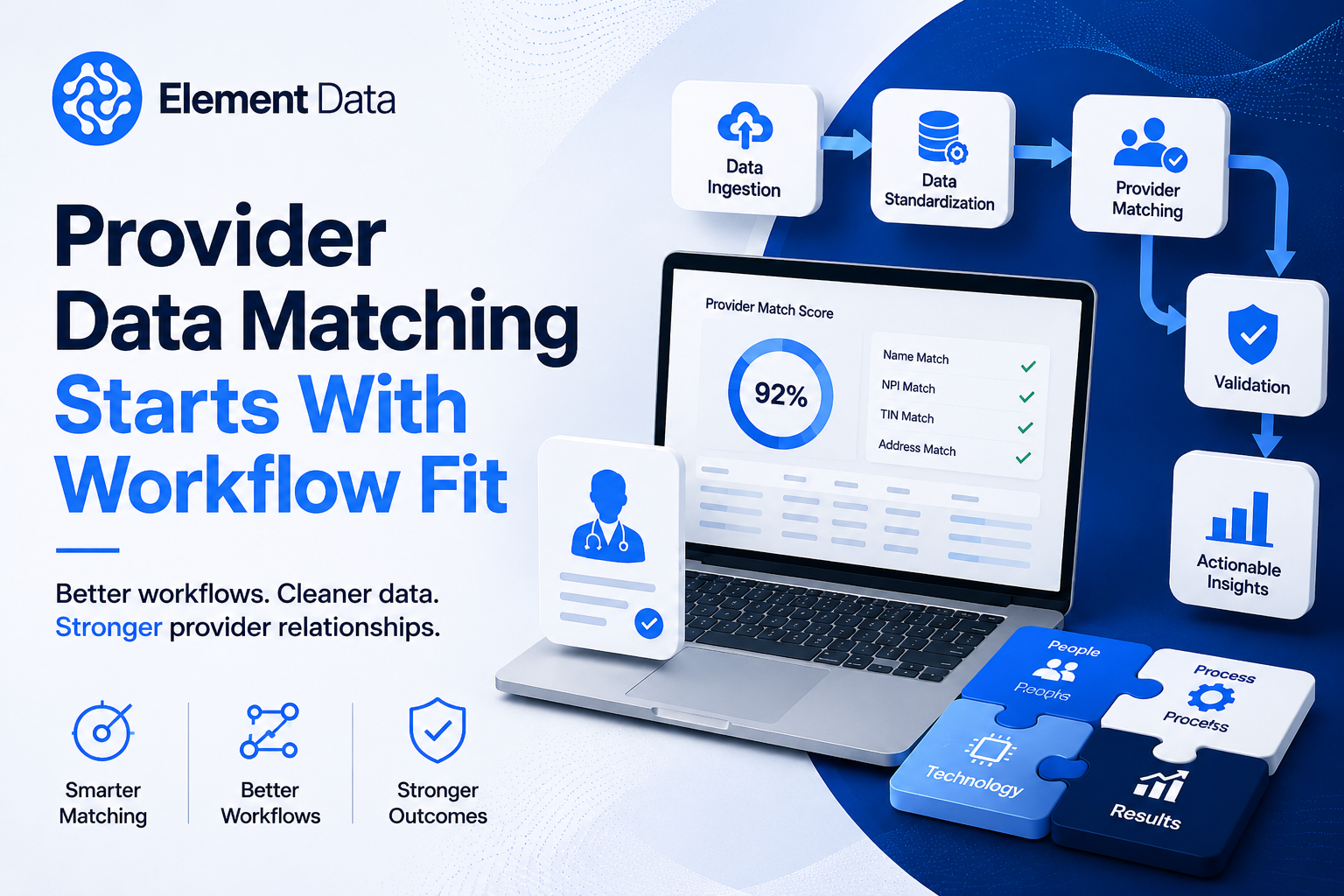
Human review becomes part of the control system. It helps decide which source is trusted, whether a match is strong enough, whether a record needs correction, and where the final decision should live. Without that review path, uncertain records either get blocked manually after the fact or move forward as if they were reliable.
What Good Review Design Looks Like
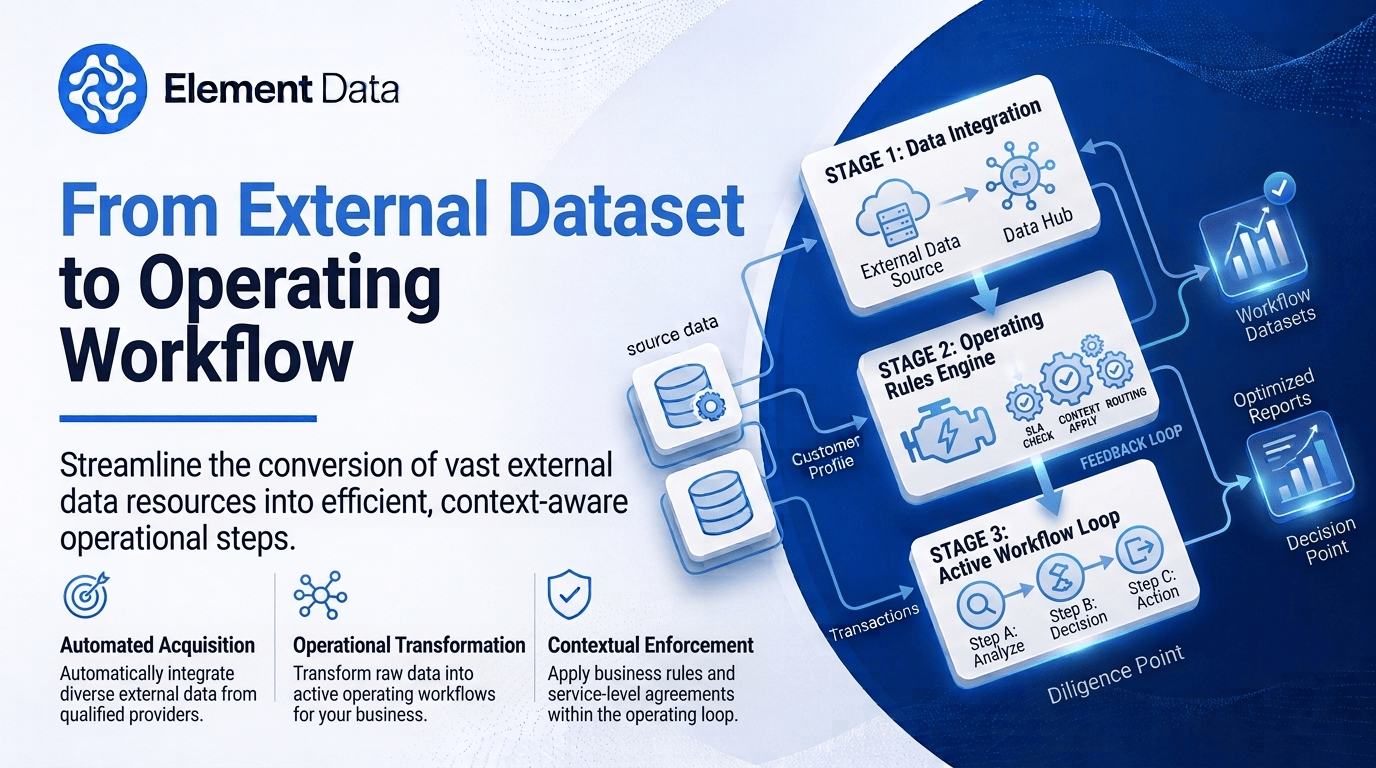
Good review design starts before the workflow is live. Teams should know which records need escalation, who owns the decision, what context the reviewer needs, and how the corrected decision gets written back.
Escalation rules are the first layer. Not every imperfect record should stop the workflow. A provider address mismatch may be acceptable for broad market sizing and unacceptable for patient routing. A trial sponsor name variation may be harmless for a quick search and critical for sponsor-level benchmarking. A specialty classification may be good enough for segmentation and too weak for network analytics.
The second layer is context. Reviewers need to see why a record was flagged, which fields conflict, which source produced each value, and what downstream workflow depends on the decision. Without that context, review becomes slow and inconsistent.
The third layer is write-back. If a human resolves an ambiguous provider match or sponsor normalization issue, that decision should not disappear into a comment thread or one-off spreadsheet. It should become part of the workflow’s operating data so the same exception does not get reviewed repeatedly.
How Snowflake-Native Data Reduces Friction
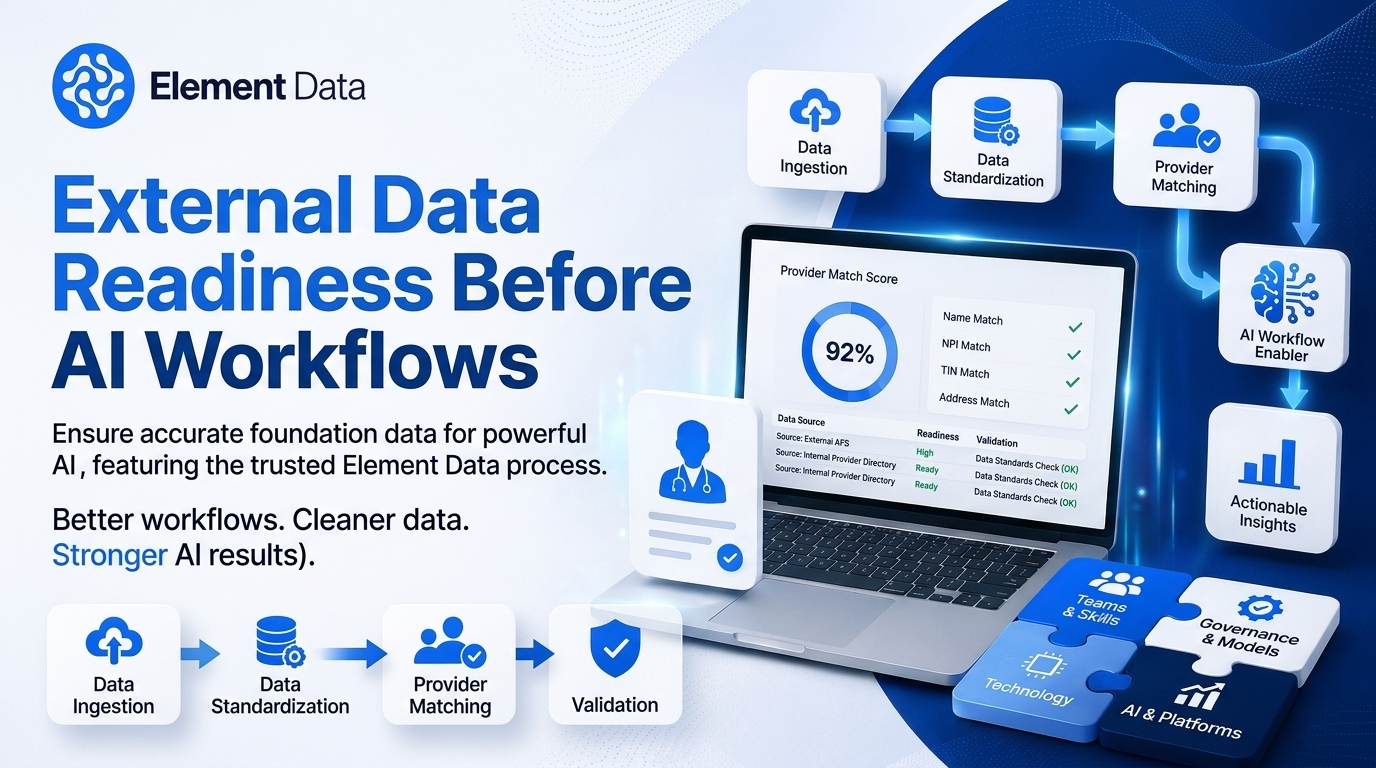
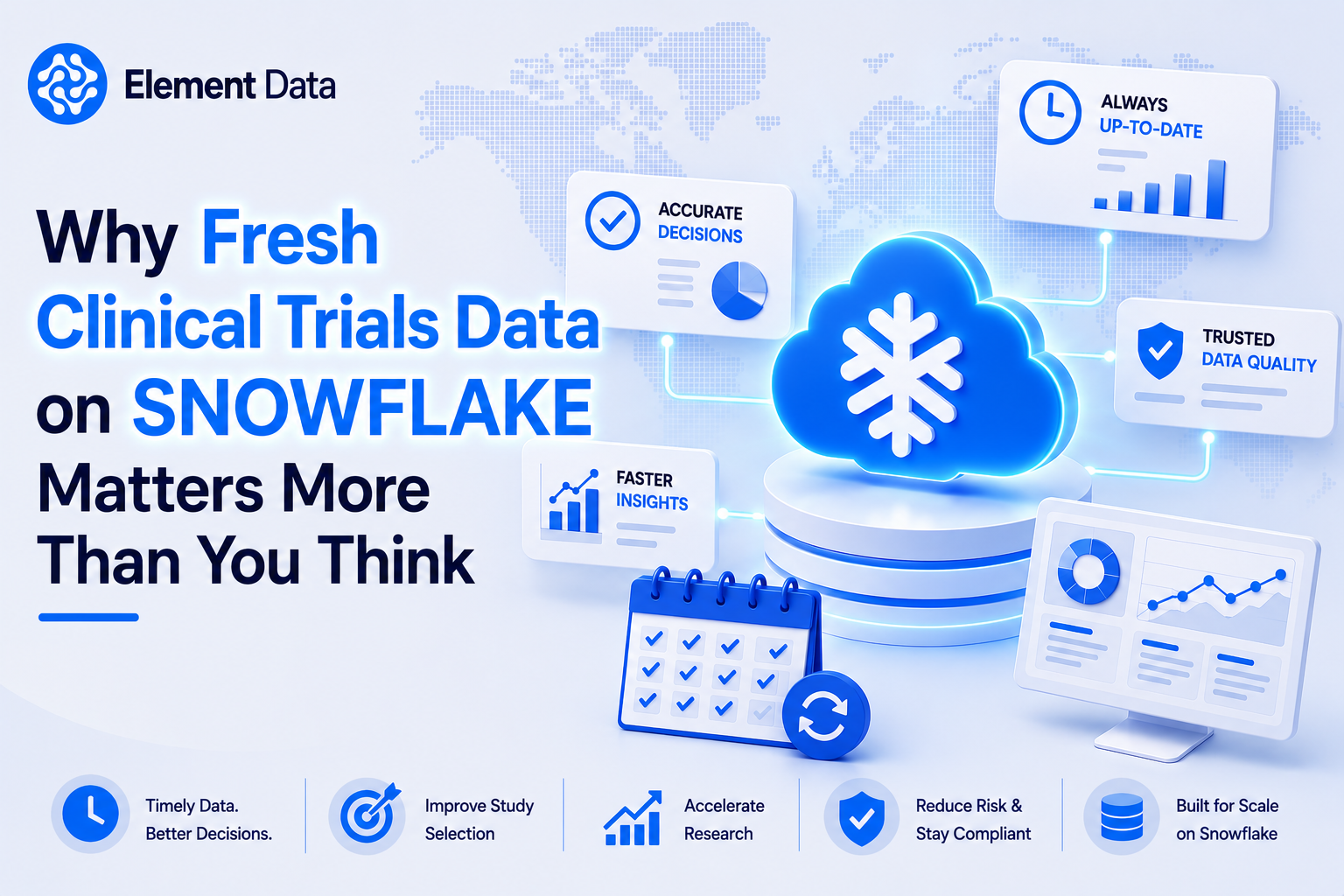
For teams building in Snowflake, normalized external data reduces the number of exceptions before the workflow starts. Clean field structures, stable schemas, predictable refreshes, and clear joins make it easier to build workflows that can be tested and repeated.
That matters because raw public data often creates preparation work before the business question can even be evaluated. Teams may have to ingest files, normalize schemas, build refresh logic, and create joining rules before they know whether the workflow is viable. Snowflake-native delivery helps shorten that path by putting structured external data where analytics and workflow logic already run.
Element Data makes public and external healthcare datasets usable inside Snowflake so teams can build from a cleaner foundation. That does not eliminate every exception. It reduces preventable cleanup and makes the remaining exceptions easier to route through a defined operating model.
The goal is not to remove human judgment from every step. The goal is to use human judgment where it matters and capture those decisions in a way the workflow can reuse.
Production Data Infrastructure Handles Ambiguity
The best data infrastructure is not the one that pretends ambiguity does not exist. It is the one that knows what to do with it.
In healthcare data workflows, ambiguity is unavoidable. Provider identity changes. Locations shift. Organizations merge. Trial records update. Public and internal sources disagree. AI can help teams move faster, but it does not remove the need for source rules, review ownership, and decision capture.
That is why production data workflows need human review by design. A demo can skip the hard cases. A production workflow has to route them, resolve them, and learn from them.
For healthcare and life sciences teams, normalized Snowflake-native data is the starting point. Clear exception handling is what lets the workflow survive real operating conditions.