External data problems usually show up too late. The dataset has already been purchased. The integration has already started. The AI workflow has already been scoped. Then the hard questions appear.
Can we trust this field? How often does it go stale? What happens when two sources disagree? Who reviews uncertain matches? Can this data support automation, or is it only safe for analysis?
Those are not small implementation details. They are readiness questions. For healthcare teams working with NPPES, CMS, AACT, hospital quality data, or other external sources, data readiness determines whether the workflow becomes repeatable or turns into another cleanup queue.
Why External Data Readiness Comes First
AI workflows tend to make weak data foundations more expensive. A dashboard with imperfect data may trigger a review. An AI workflow with imperfect data can turn that same weakness into a confident recommendation, routing decision, match, summary, or prioritization step.
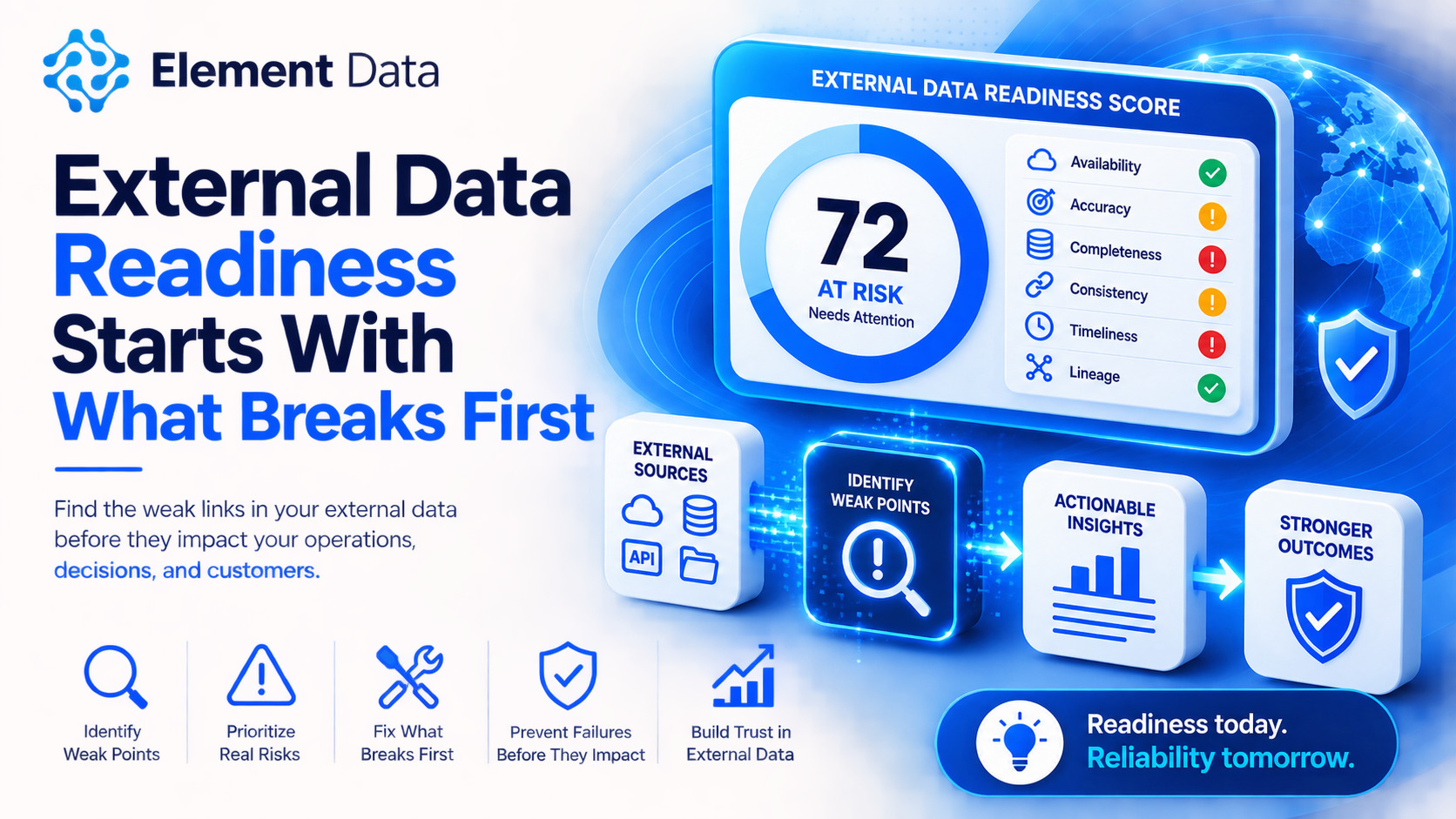
That is why readiness has to be reviewed before teams build on top of external data. The first question should not be whether the data is interesting. It should be whether the data can support the operating decision the workflow needs to make.
Healthcare data makes this especially clear. NPPES can describe provider identity, but provider records change. CMS data can describe utilization and payment patterns, but the fields need context and clean joins. AACT can support clinical trial intelligence, but trial records update, sponsor names vary, and status changes matter. Hospital quality data can support market and performance analysis, but the workflow needs to know how current and comparable the fields are.
Access alone does not answer any of those questions. A team can have the right source and still lose time if the fields are inconsistent, schemas shift, refreshes are unclear, or exceptions have no owner.
What Readiness Should Actually Cover
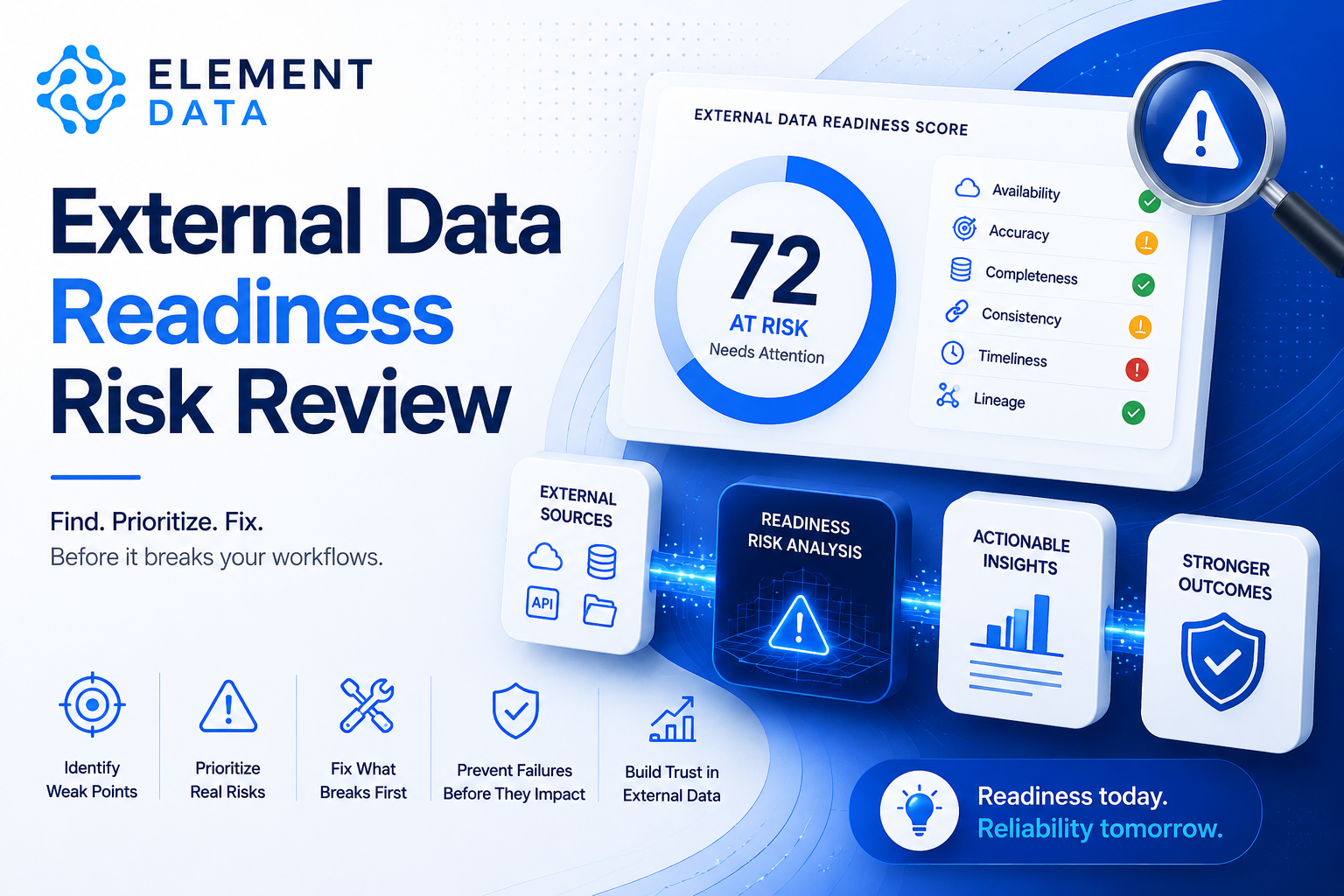
A practical external data readiness review should be specific. Generic data quality checks are not enough. The review has to connect the dataset to the workflow it will support.
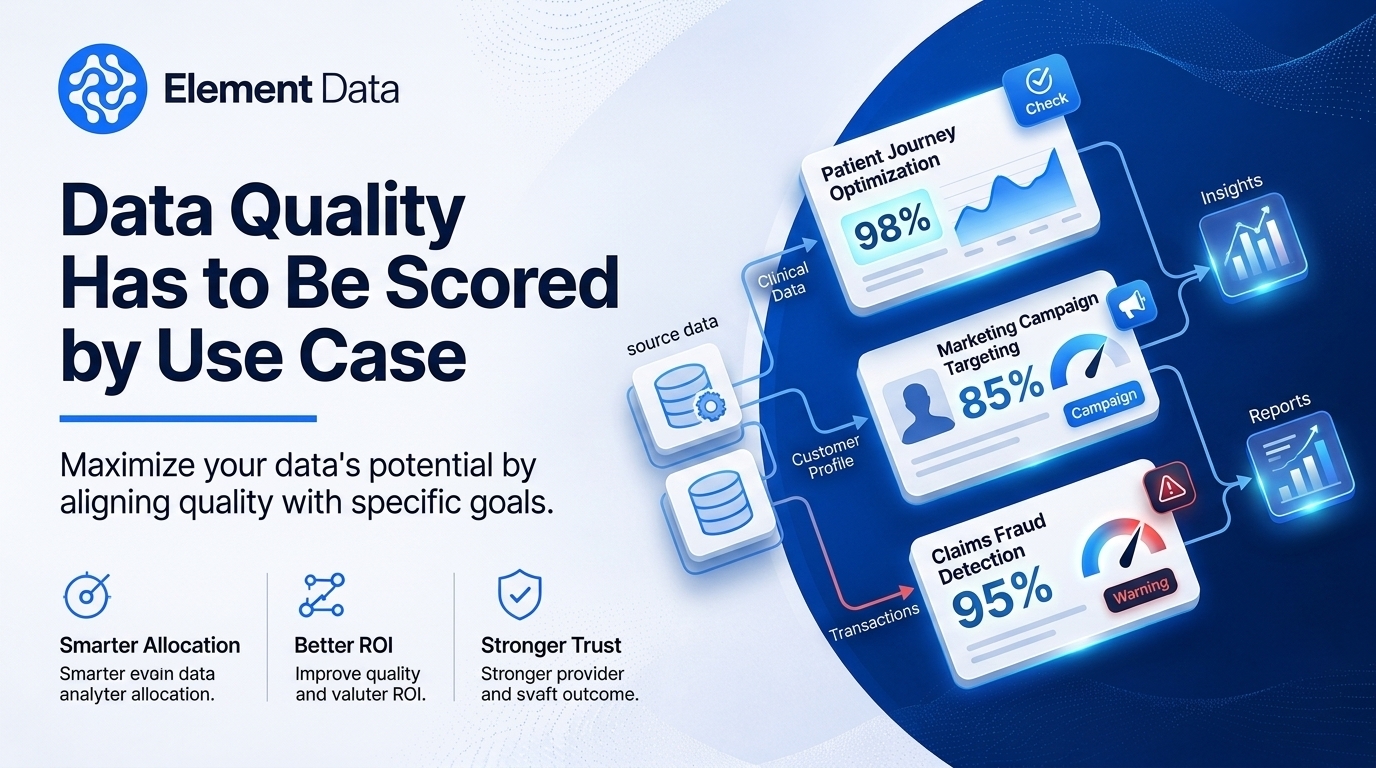
Start with field trust. Which fields are critical to the decision? Which fields are optional context? Which fields are likely to create risk if stale, incomplete, or mismatched? A provider address may be acceptable for market sizing and unacceptable for patient routing. A specialty field may work for broad segmentation and fail for precise targeting.
Then review refresh expectations. Some workflows can tolerate monthly updates. Others need more current signals. The important point is not to demand maximum freshness for every source. The point is to match refresh cadence to the business decision and make that cadence predictable.
Schema stability also matters. AI and analytics workflows are fragile when upstream structures change without warning. Stable schemas reduce the amount of defensive engineering required to keep joins, models, dashboards, and review processes working.
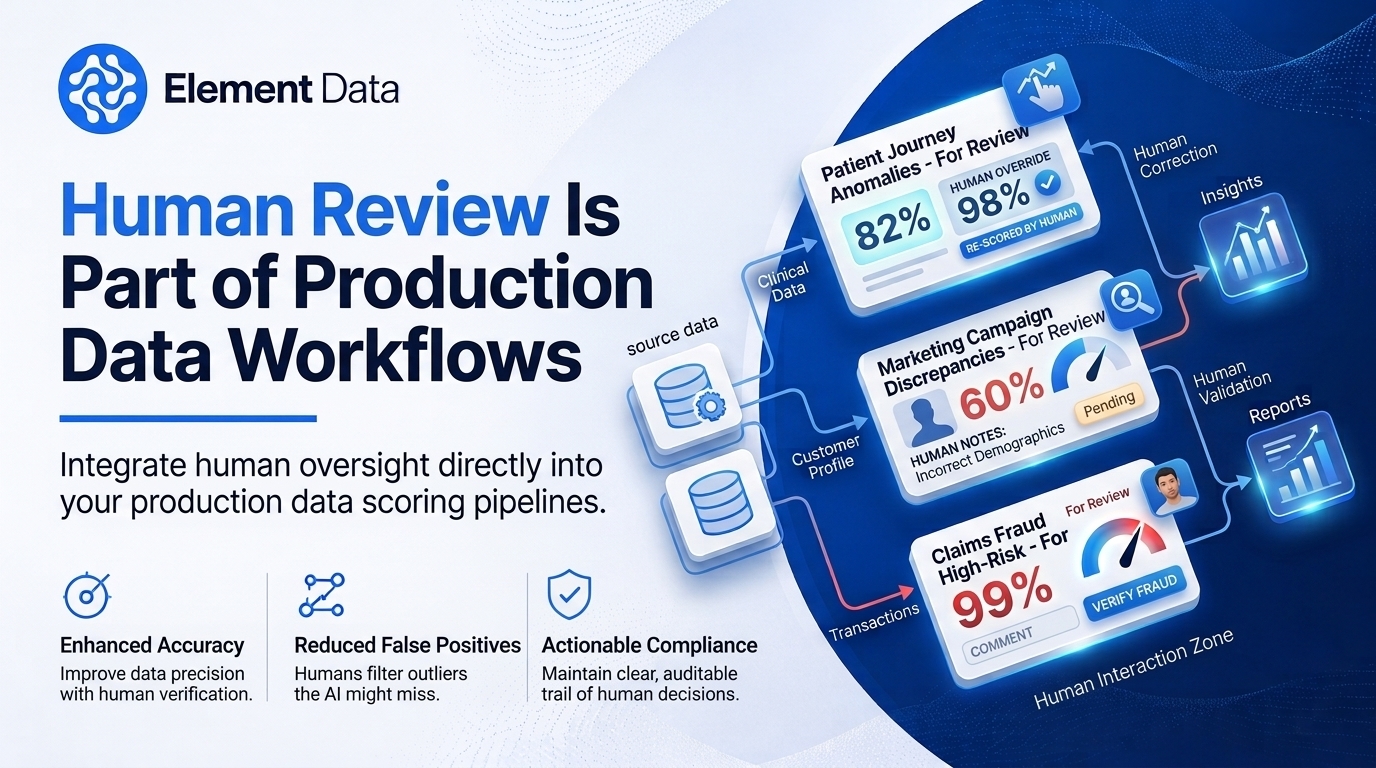
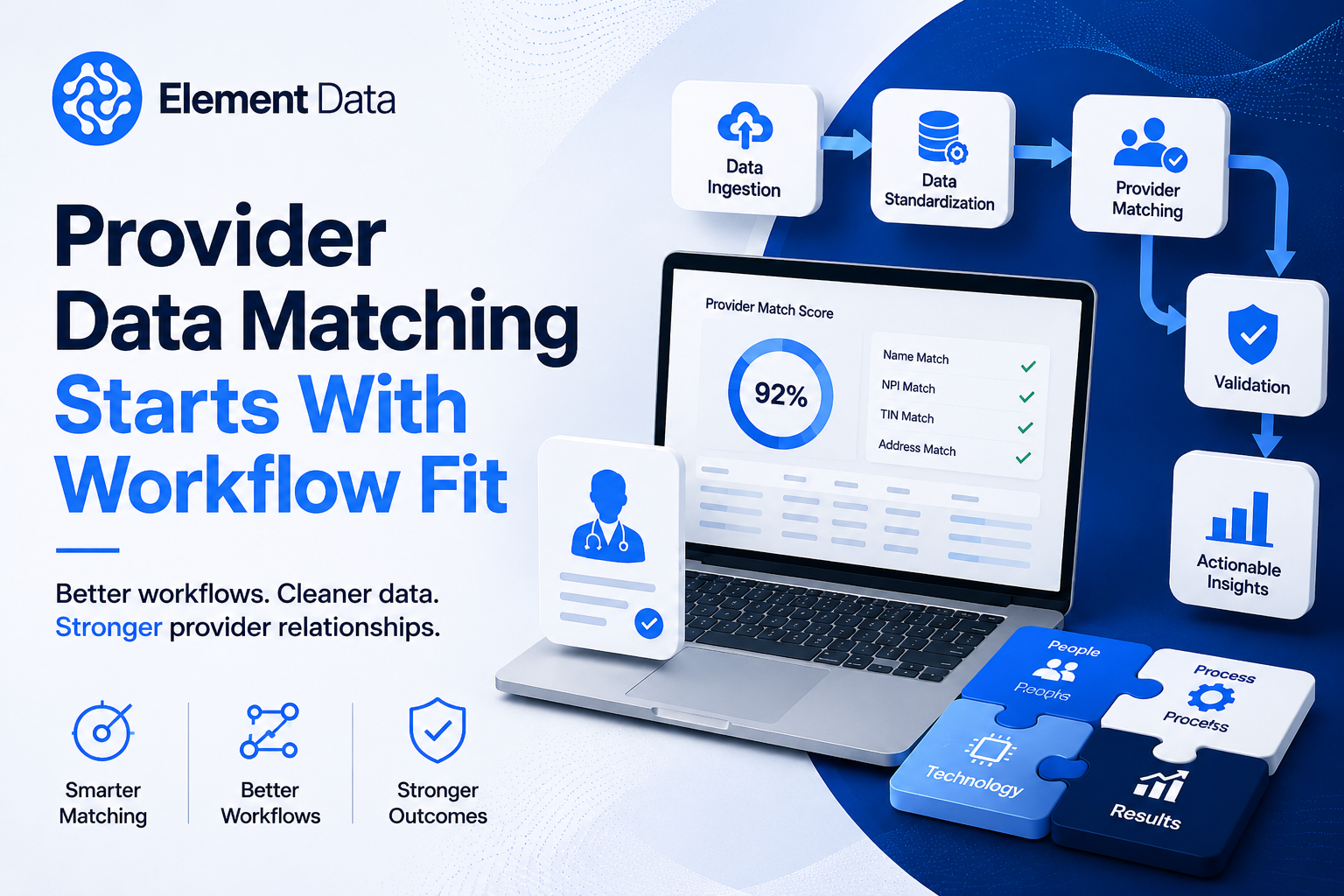
Finally, readiness should include exception paths. External data will always contain edge cases. Sources will disagree. Provider records will go stale. Trial records will change. Some matches will be uncertain. A production workflow needs to define which records can flow through automatically, which require review, who owns the review, and where the corrected decision gets written back.
Where Snowflake-Native Delivery Helps
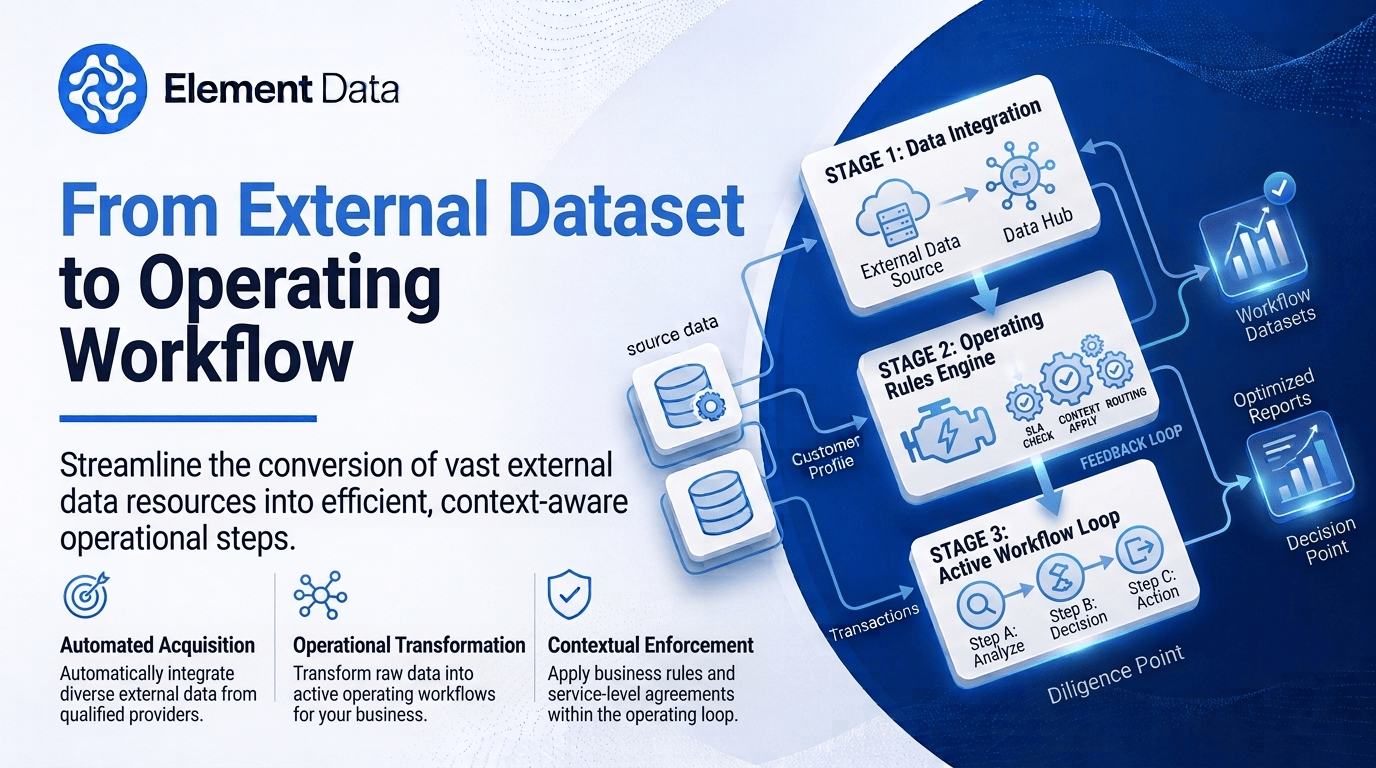
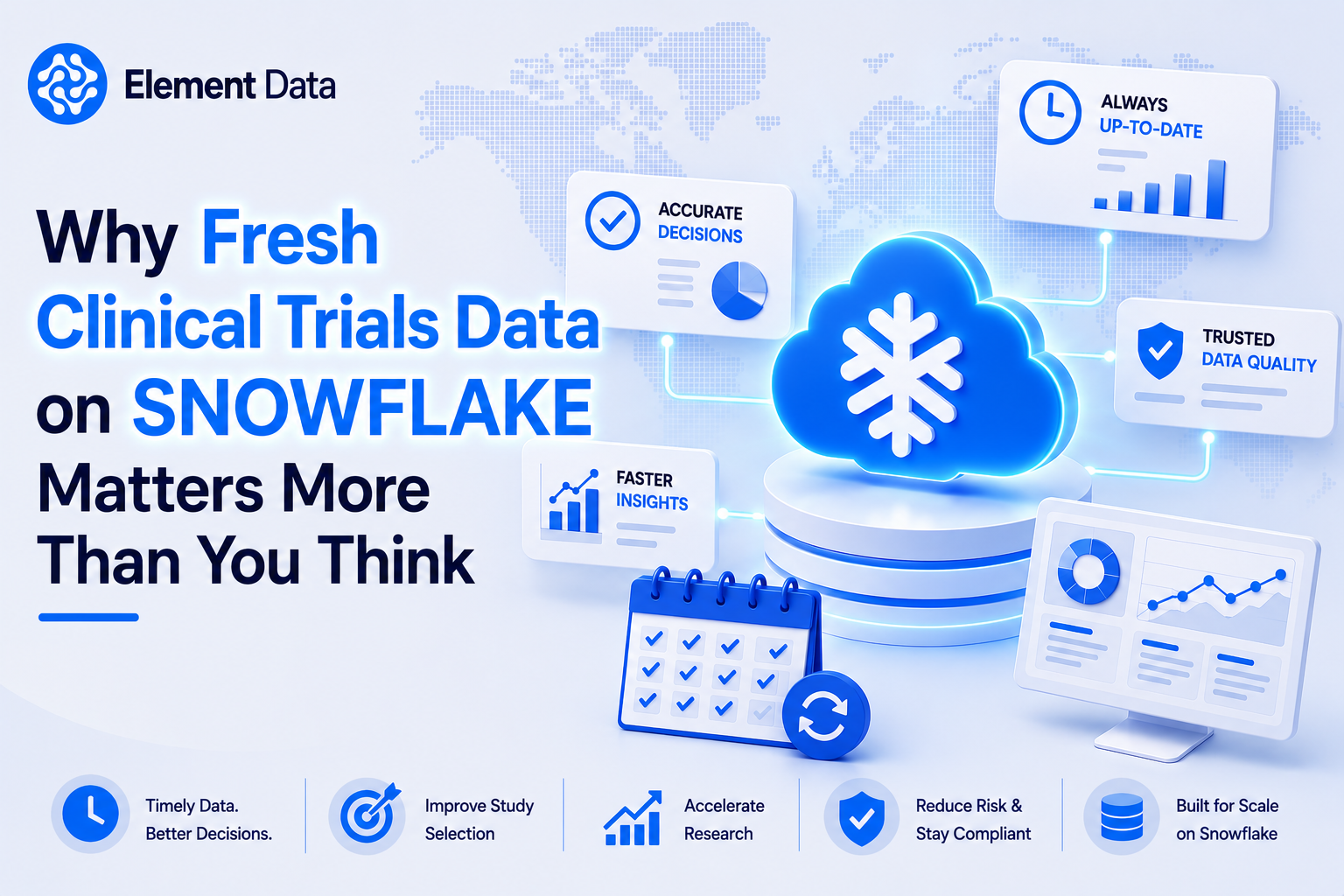
Snowflake-native delivery helps because it moves external data closer to where teams already run analysis, modeling, joins, and workflow logic. Instead of downloading raw files, building ingestion jobs, maintaining refresh scripts, and normalizing source structures from scratch, teams can evaluate external data inside the environment where the work already happens.
That reduces the time between interest and evaluation. A healthcare data team can test joins against internal account data, geography, network files, provider records, or clinical intelligence workflows without first rebuilding the public data supply chain.
But Snowflake-native delivery is only valuable if the dataset is already structured for use. A raw dataset placed in Snowflake can still create work. The real value comes from normalized fields, stable schemas, predictable refreshes, clear joins, and enough structure to support repeatable use.
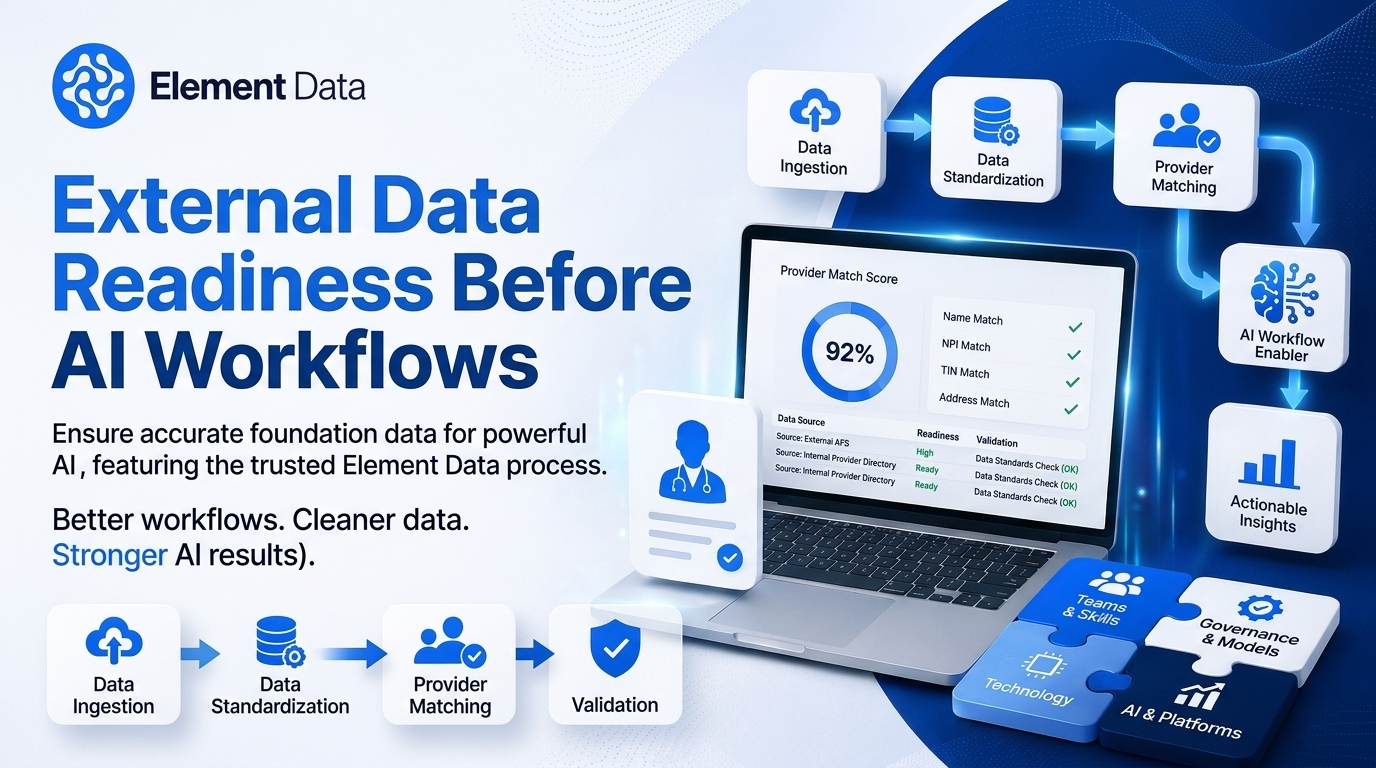
Element Data’s role is to make external healthcare and life sciences datasets more usable inside Snowflake before teams build analytics or AI workflows on top. The goal is not simply to provide access to public data. The goal is to reduce the pipeline cleanup and data preparation work that slows teams down before they can test the actual business question.
The Strongest Teams Review Readiness Early
The strongest data teams review readiness before they commit the workflow to a data foundation. They ask what can break, where uncertainty will appear, how often the data changes, and whether the data can support automation safely.
That review does not need to slow the work down. It usually prevents rework later. A clear readiness check helps teams decide whether a dataset is fit for routing, targeting, network analysis, clinical trial intelligence, market analysis, or only exploratory research.
External data can be valuable in healthcare AI workflows, but only when it is ready for the job it has to do. Normalized fields, stable schemas, predictable refreshes, clear joins, and known exception paths are the difference between data that supports a workflow and data that creates another cleanup queue.