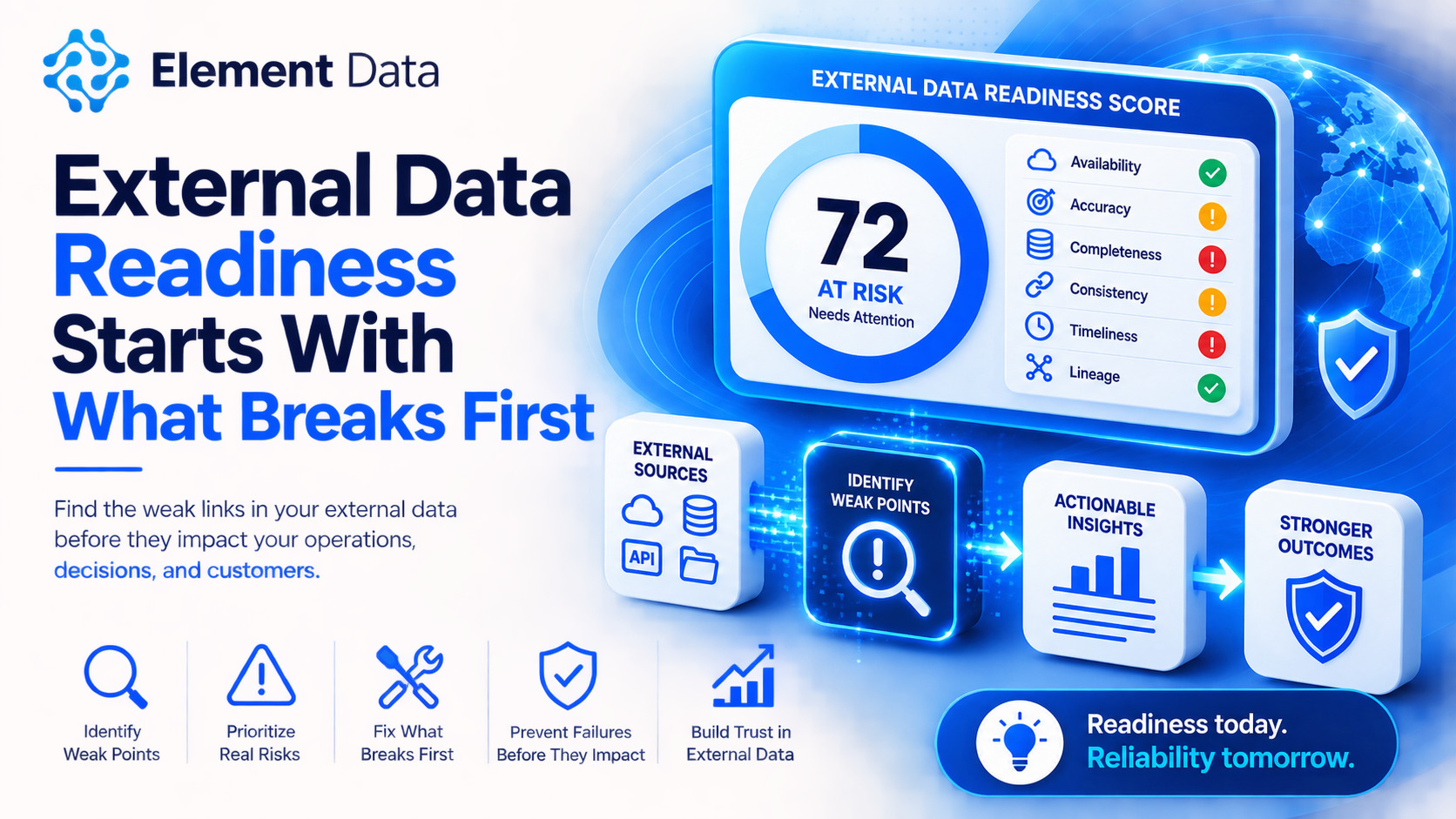
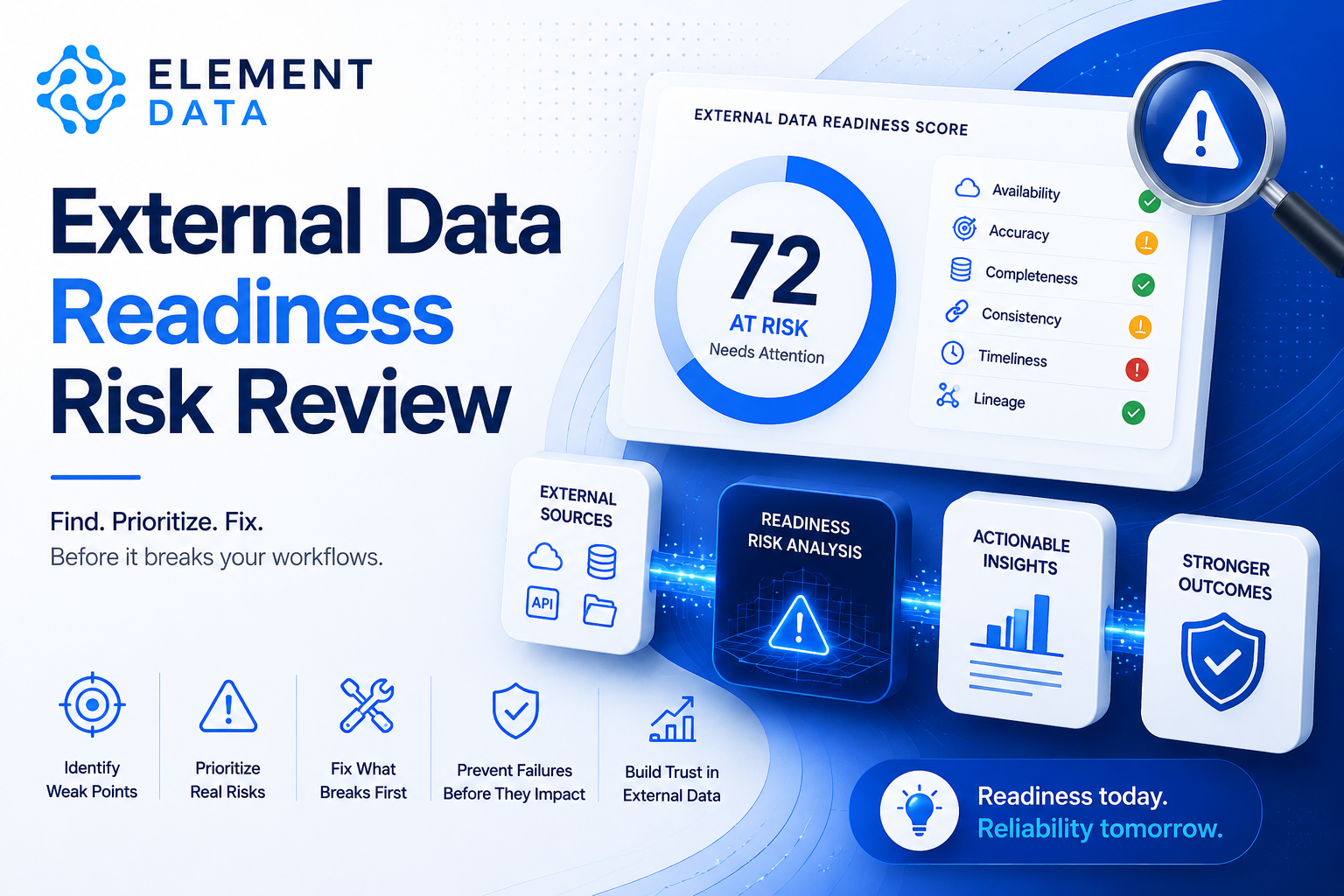
Before putting external data into an AI workflow, ask one uncomfortable question: what breaks if this data is wrong?
If the answer is “not much,” the use case may be low risk. If the answer is wrong patient routing, bad provider targeting, flawed pipeline benchmarking, broken enrichment, or recurring manual cleanup, readiness matters before the workflow ever goes live.
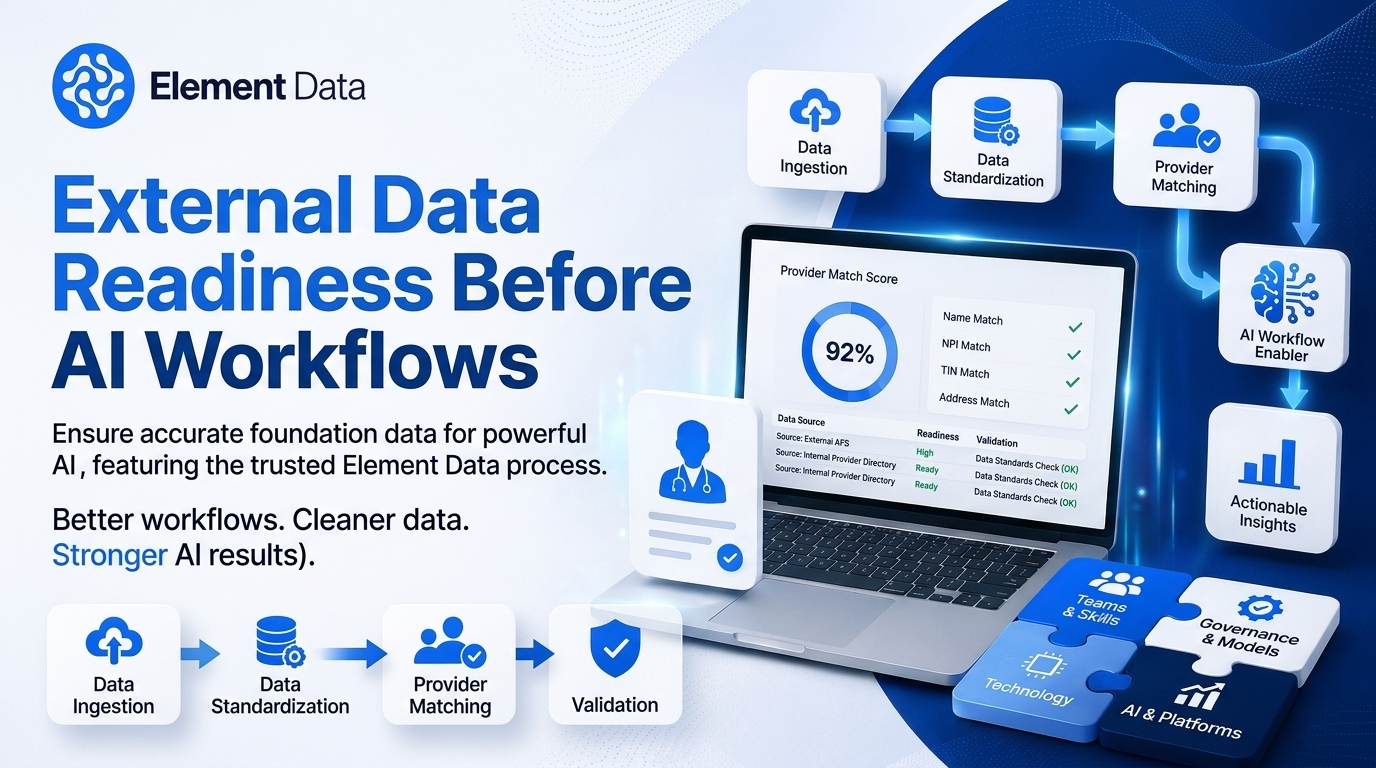
External data readiness is not just a procurement check. It is a practical risk review across provider fit, field trust, source conflicts, entity resolution, refresh cadence, exception design, and downstream workflow impact.
Why External Data Risk Shows Up Late
Most teams discover external data problems during implementation. The dataset has already been selected. The integration has started. The AI workflow has been scoped. Then the team learns that a critical field is stale, a source does not join cleanly, or the workflow has no rule for conflicting records.
That delay is expensive because external data issues rarely stay contained in the data layer. A stale provider record can affect routing, network analytics, or field planning. A fragmented sponsor name can weaken clinical trial benchmarking. A CMS field may be useful only after it is joined to provider, geography, or internal account context. A GDELT signal may need normalization before it can support repeatable event analysis.
The data may be public. The production risk is not. Once a dataset becomes part of an AI or analytics workflow, weak structure can turn into operational drag. Analysts review exceptions by hand. Engineers build cleanup scripts. Business users question the output. The workflow loses trust before it has a chance to prove value.
What an External Data Readiness Review Should Cover
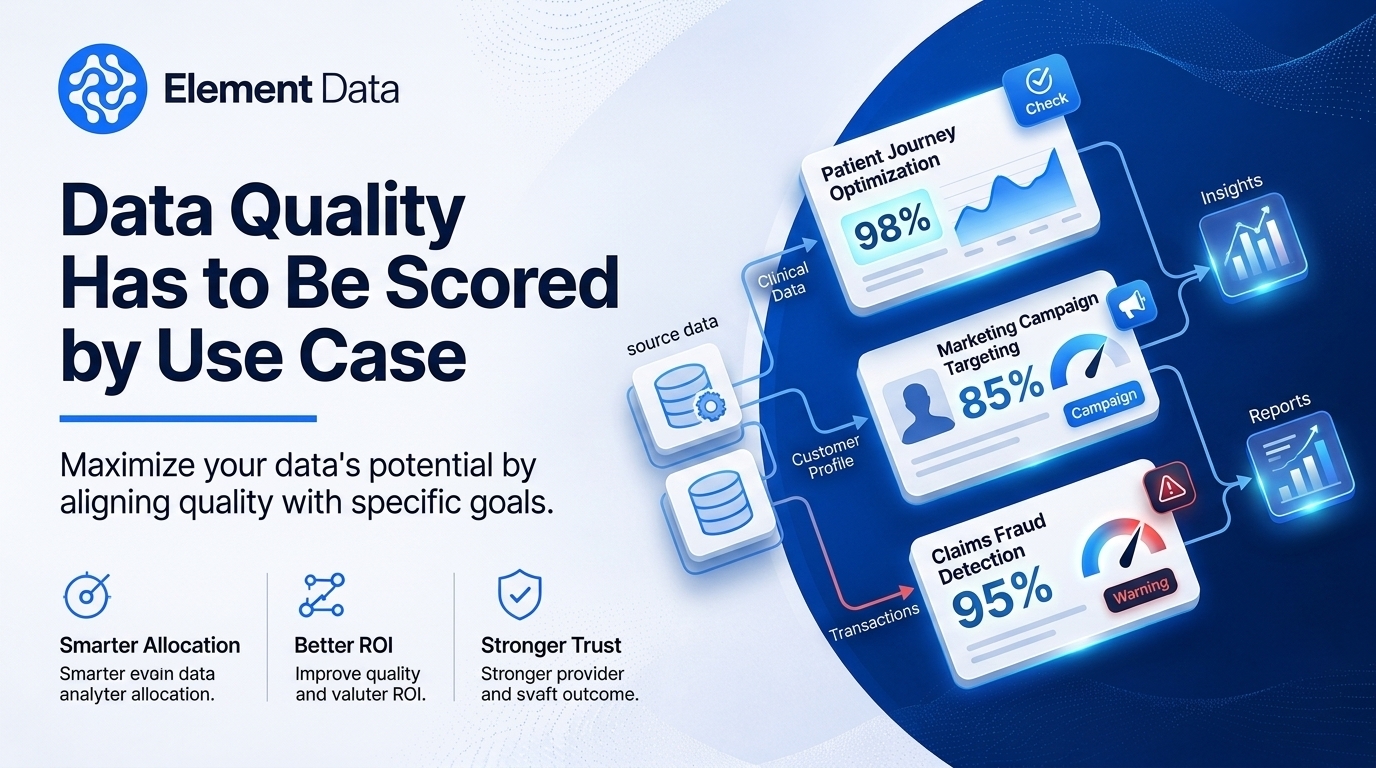
A useful readiness review starts with the decision the data will support. Teams should identify which fields are critical, which fields are only context, and what happens if a critical field is wrong.
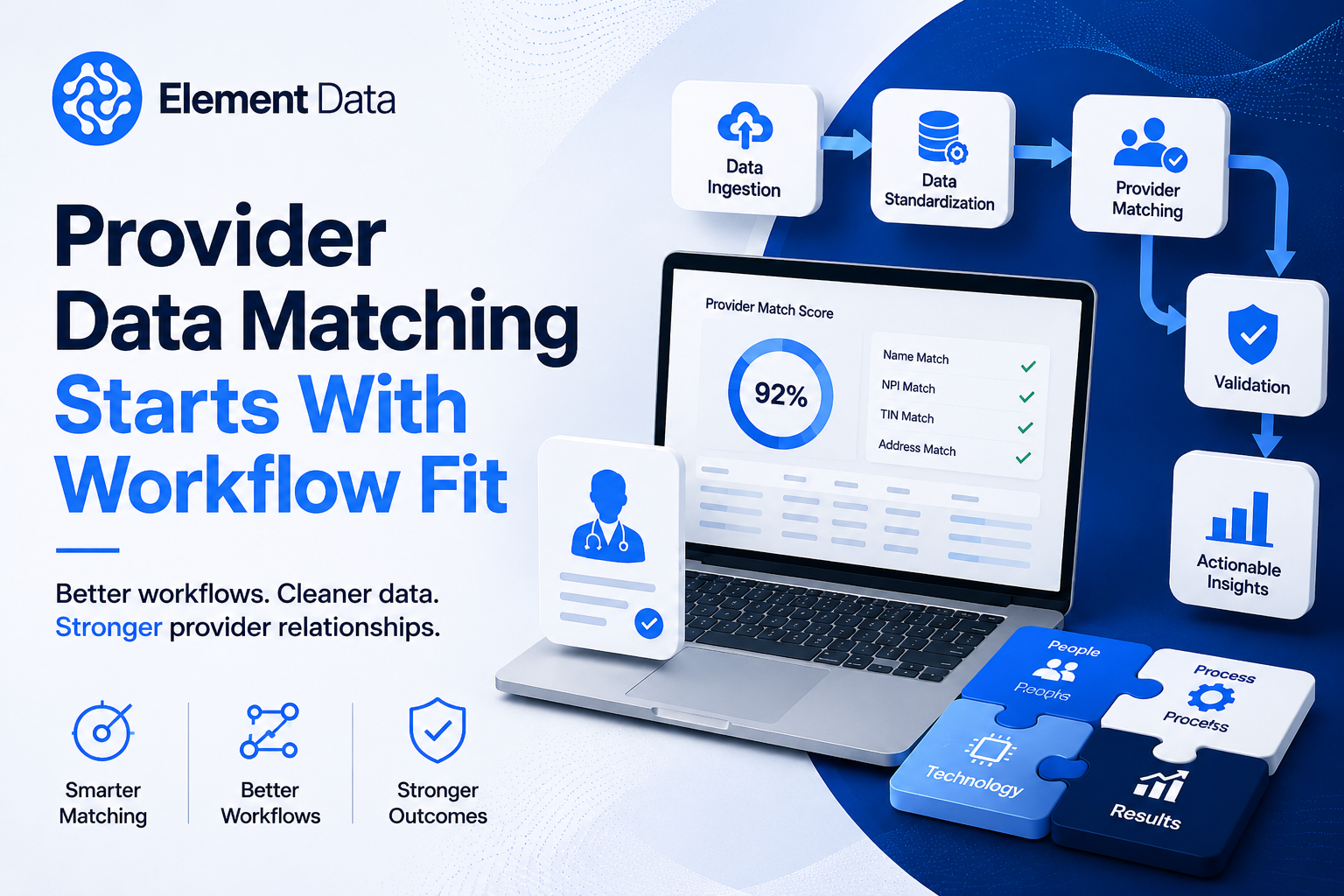
Provider data makes this clear. Location, specialty, taxonomy, affiliation, and NPI status may carry different levels of risk depending on the workflow. A provider address may be acceptable for broad market analysis and unsafe for patient routing. A specialty field may support segmentation but fail in a network analytics workflow that needs more precision.
Source conflicts should be reviewed before production use. If two sources disagree, which one wins? If internal data conflicts with public data, who reviews the record? If a clinical trial sponsor appears under multiple names, where does the normalized decision live?
Refresh cadence also belongs in the review. Not every workflow needs the fastest possible update cycle, but every workflow needs a cadence that matches the decision. Clinical trial monitoring, provider validation, CMS analysis, and macro signal research all have different freshness requirements. The important point is that the cadence is understood before the data supports automation.
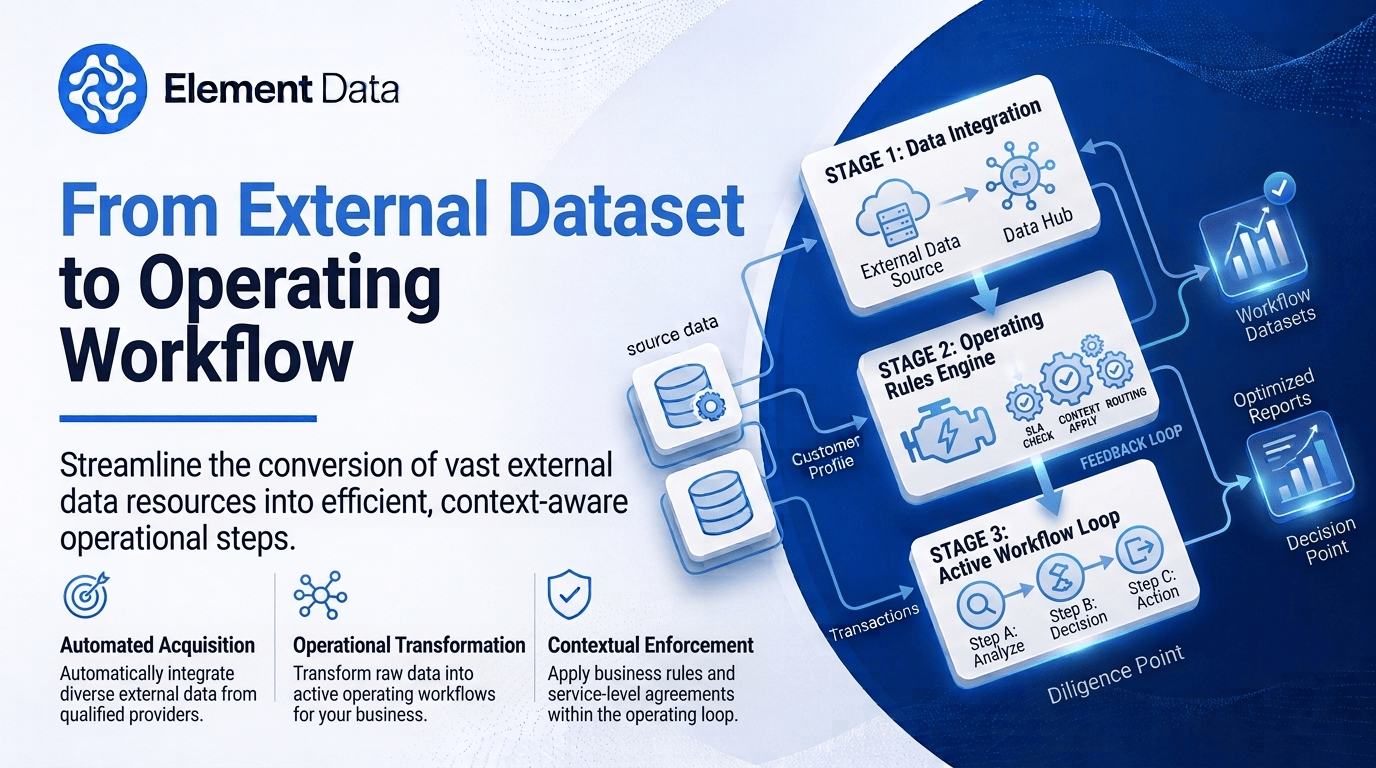
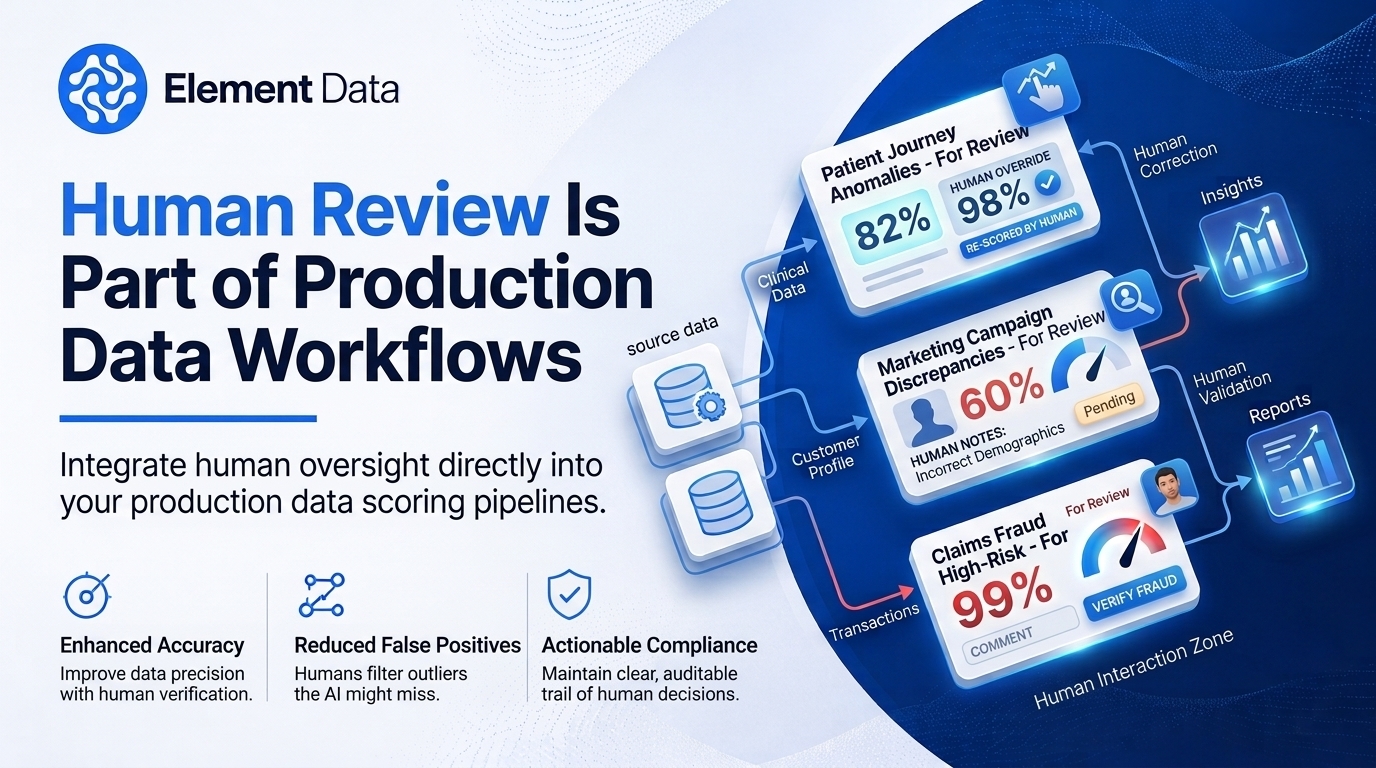
Exception design is the final test. External data will always contain records that do not fit cleanly. A production workflow needs to know which records move through automatically, which require review, who owns the review, and where the corrected decision gets written back.
Why Snowflake-Native Delivery Helps Only When the Data Is Structured
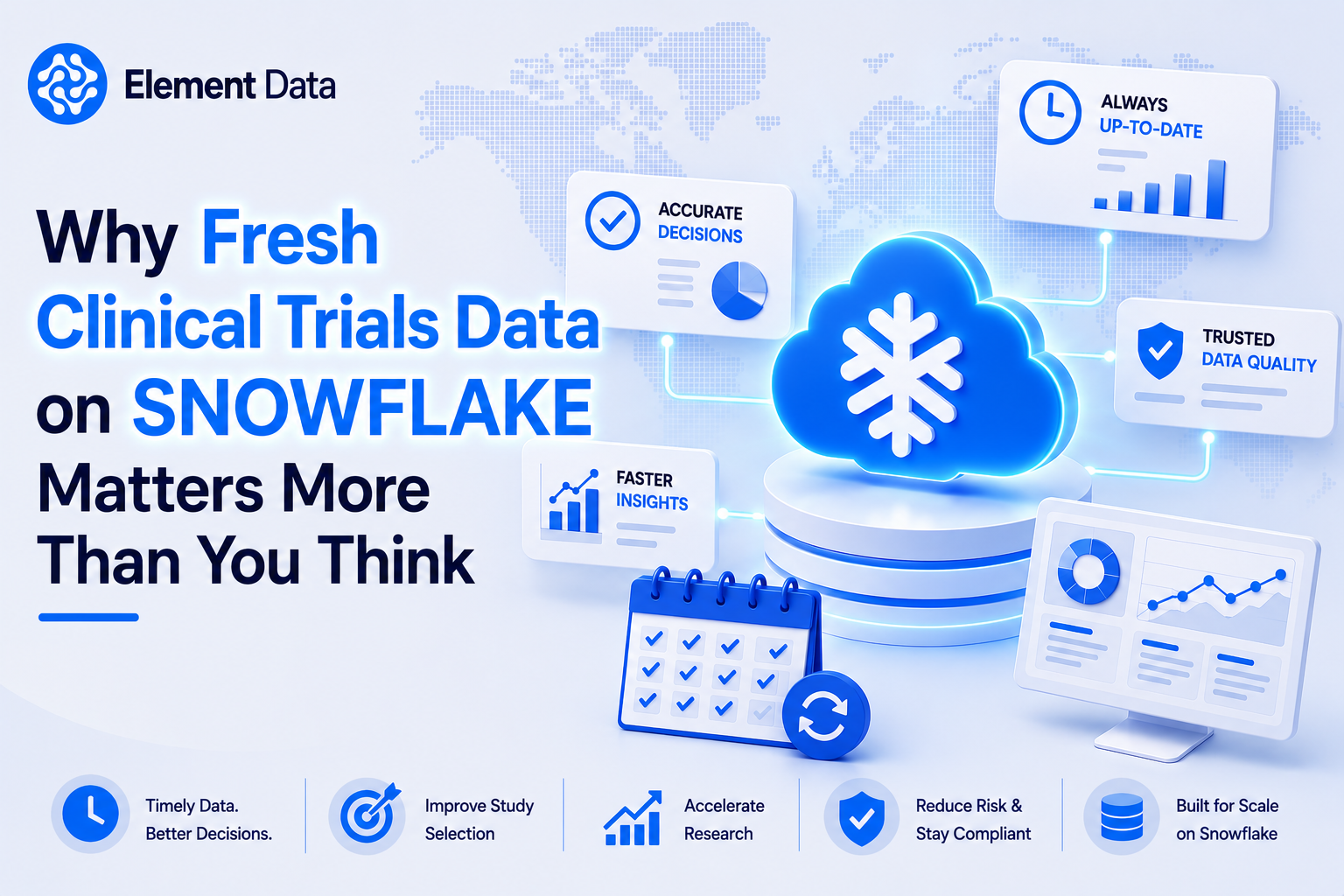
Snowflake-native delivery can reduce the friction of testing and using external data. Teams can evaluate joins, models, dashboards, and workflows where much of their analytics work already happens. That shortens the path from dataset interest to workflow evaluation.
But delivery alone does not make data ready. A raw file placed in Snowflake can still create cleanup work. The value comes when the data is normalized, current, structured with stable schemas, and prepared for reliable joins.
For healthcare and life sciences teams, that can mean normalized NPPES records, CMS data prepared for analysis, ClinicalTrials.gov or AACT data shaped for trial intelligence, and public signal datasets like GDELT made easier to test in repeatable workflows. The aim is not simply access. The aim is to reduce the risk that the data foundation breaks once automation is added on top.
Element Data exists to reduce that risk by making external datasets normalized, current, and usable inside Snowflake. The buyer should not have to rebuild public data into workable shape before learning whether the business question is worth pursuing.
Review Readiness Before Trust Is Committed
Better teams review external data readiness before money, time, and trust are committed. They ask what can break, which fields carry risk, how fresh the data needs to be, how conflicts get resolved, and whether the workflow can survive real operating conditions.
That review does not slow down serious work. It prevents avoidable rework later. It also separates data that is interesting from data that can support production decisions.
External data can improve healthcare and life sciences workflows, but only when the foundation is ready. Public data sources like NPPES, CMS, ClinicalTrials.gov, and GDELT can be valuable. The practical question is whether they are normalized, current, joinable, and governed well enough to support the workflow.
Before the AI layer goes live, the data layer needs a readiness review. The uncomfortable question is still the right one: what breaks if this data is wrong?