


The Global Database of Events, Language, and Tone – maintained and delivered as native Snowflake tables – so quant and research teams can build news-based signals without wrangling terabytes of CSVs.
Provider data enrichment is the process of completing, correcting, and standardising healthcare provider records against an authoritative source. Element Data does it Snowflake-native: the full NPPES / NPI dataset sits in your account, so you append NPI, specialty, and location and reconcile identities in SQL – no vendor pipelines, no data leaving your environment.
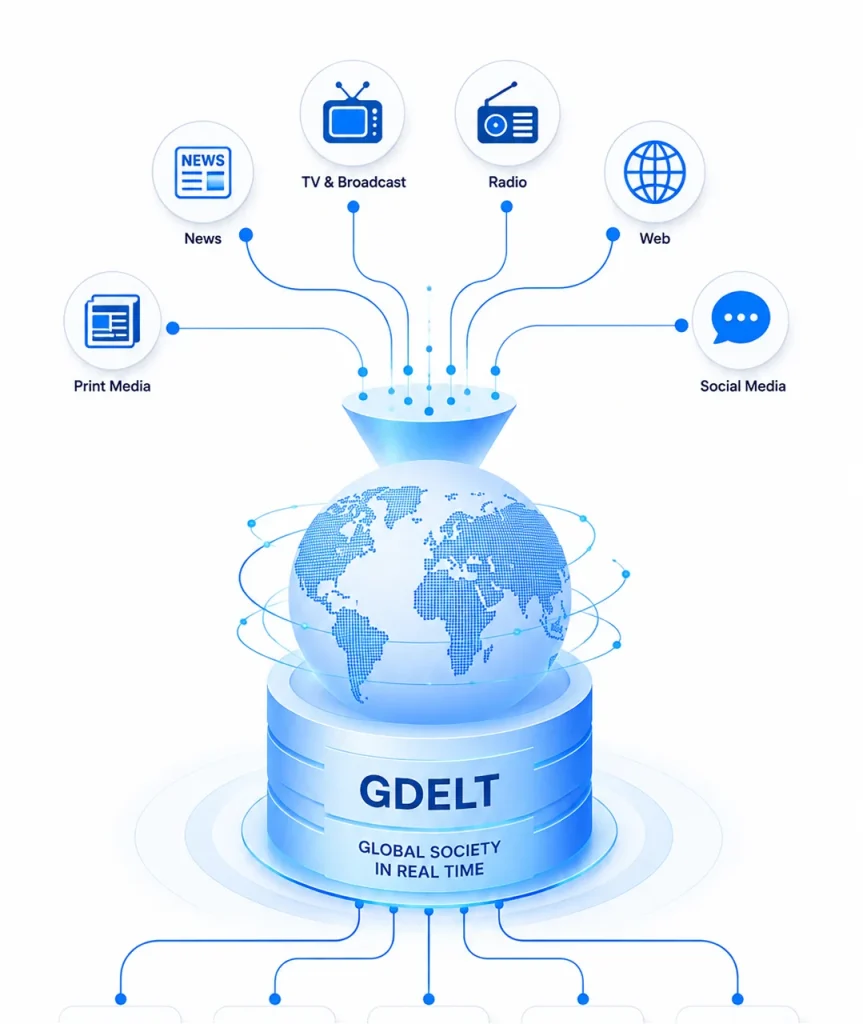
GDELT is an open, real-time dataset of global society built from worldwide news media. It has two core components.
The Event Database records individual events – who did what to whom – using standardised CAMEO event coding, with history reaching back to 1979. The Global Knowledge Graph (GKG) extracts the people, organisations, locations, themes and emotions from each article, producing an annotated graph over the world’s news. GDELT 2.0 updates every 15 minutes.
GDELT is an open, real-time dataset of global society built from worldwide news media. It has two core components.
Where established vendors still win. Master-data platforms like Tamr, Reltio and specialists like CarePrecise bring survivorship rules, stewardship workflows and multi-domain mastering that a shared dataset simply does not have. The honest framing is that they solve a bigger problem. If your requirement is authoritative provider reference data sitting next to your records, you probably do not need that bigger problem solved – and the Snowflake-native route is dramatically lighter.
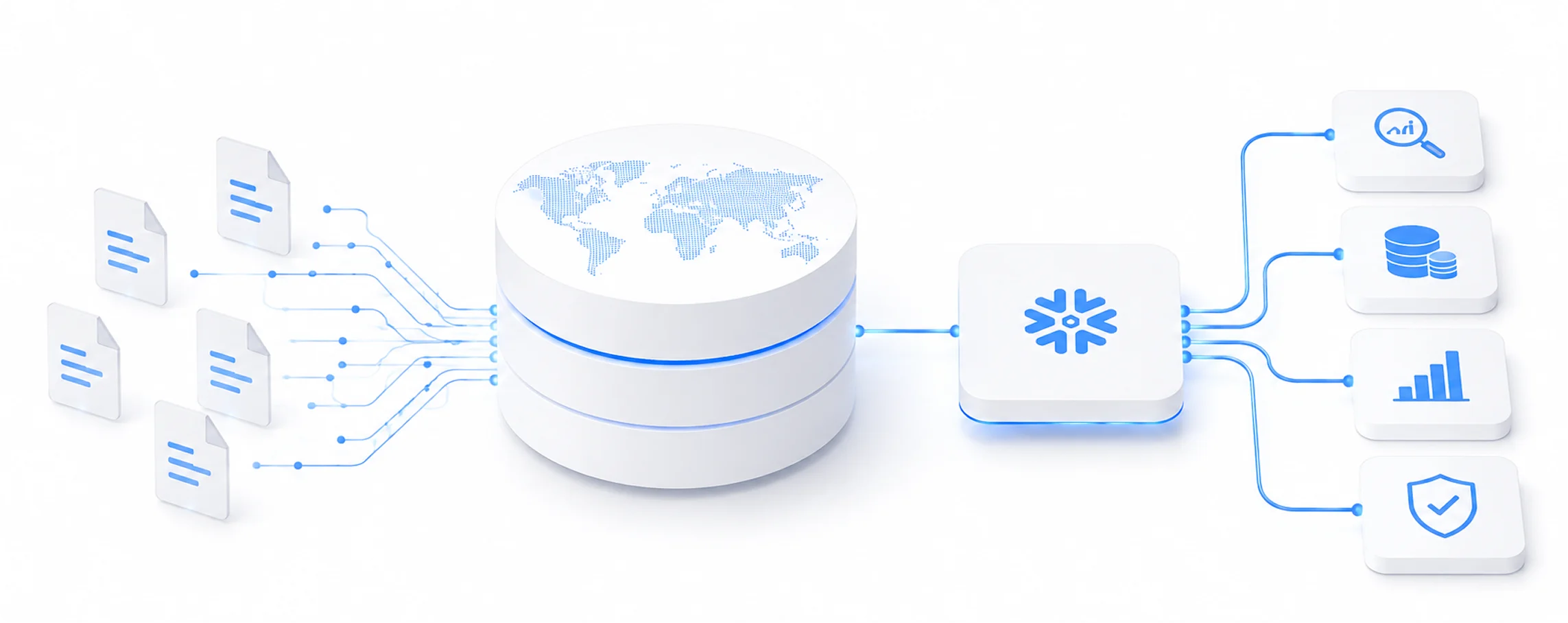
GDELT is enormous – a single year of the GKG runs into the terabytes – and it is distributed as continually updated CSVs. That is a perfectly workable arrangement if you have an engineer whose job is to maintain the ingest. Most quant teams would rather that engineer worked on signals.
Delivered on Snowflake, GDELT becomes a maintained, query-ready dataset in your own environment, joinable to your internal signals and factor data without moving it across platforms or standing up a separate ingestion pipeline. You size a warehouse to the question and query; you do not provision storage for the corpus.
Handle with care. GDELT measures coverage, not reality. Reporting density differs sharply by country
and language, automated coding makes mistakes, and a single event syndicated widely can look like
many events. Serious signal work normalises against baseline coverage volume and validates against a
second source. We would rather you knew that before you subscribed.

Alternative data for investment research - build news-based signals and event studies. See
Geopolitical and country risk - monitor conflict, protest & instability indicators across regions.

Supply-chain and commodity monitoring - track events affecting specific regions and sectors.
Media and narrative analysis - measure themes, tone & entity co-occurrence over time.
Data provenance. GDELT is published by The GDELT Project. Element Data is an independent Snowflake data provider, not affiliated with GDELT.
GDELT stands for the Global Database of Events, Language, and Tone – an open dataset built from worldwide news media, comprising an Event Database and a Global Knowledge Graph. It is maintained by The GDELT Project.
GDELT 2.0 updates every 15 minutes, monitoring news across more than 65 languages. On Snowflake, Element Data keeps the dataset current for you rather than leaving you to chase a continually updating CSV feed.
The data is the same open GDELT source. The difference is location: Element Data delivers it in Snowflake so it sits alongside your other Snowflake data and joins to it directly, without cross-platform movement or a second cloud bill. If your stack is already on BigQuery, the public GDELT dataset there is a perfectly reasonable choice, and we would say so.
Use the Event Database when you want to count discrete happenings: protests, conflicts, diplomatic actions, coded with CAMEO. Use the GKG when you care about narrative – which entities, themes, and emotions co-occur in coverage. Signal work often uses both: events for the what, GKG for the context around it.
Used carefully, yes – but it needs handling. GDELT reflects media coverage, not ground truth: coverage volume varies by region and language, machine coding introduces error, and duplicate reporting can inflate event counts. Quant teams typically normalise by baseline coverage and treat GDELT as one input among several. Anyone who tells you it is a clean alpha source has not worked with it.
Large enough that it is the reason people come to us. A single year of the GKG runs into terabytes, and the Event Database holds hundreds of millions of records with history reaching back to 1979. On Snowflake, you query it with a warehouse sized to the question rather than provisioning storage for the whole corpus.
Element Data is built by Liquid Technologies (Liqteq). We deploy frontier AI inside healthcare and regulated organisations’ own environments, cloud or on-premises, so they get frontier capability without their data ever leaving their control. When a project needs pipelines or models built around that data, the same team does it, inside the same boundary.
AI solutions provider and data engineering, delivered inside your environment.
AI-powered payer contract intelligence for IPAs, MSOs, and provider networks.
Video intelligence turning camera feeds into real-time operational alerts.
The AI operations layer for teams, deployed inside your own cloud.
Set up a free consultation with our data experts and see how quickly you can access — and monetize — the data that moves your business.
Tell us about your data requirements, and our team will Shortly Connect with you