Research desks drown in alternative data pitches every week. Most of them fail before the first backtest runs.
The problem is not a shortage of sources. The problem is that most alt-data ideas collapse when they meet the reality of a production research workflow.
Why Most Alternative Data Fails in Production
A vendor sends a sample file. The signal looks interesting. An analyst spends two weeks cleaning and reshaping the data to match internal schemas.
Then the source updates. The schema changes. The pipeline breaks. The analyst who built it left three months ago.
This pattern repeats across quant teams, macro desks, and fundamental research groups. The issue is not the signal. The issue is operationalization.
Alternative data that cannot be tested, joined, refreshed, and explained is not an asset. It is a maintenance burden disguised as alpha.
What Separates Useful Alternative Data from Noise
The datasets that survive in production share a specific profile.
They map to a real investment question. Not a vague theme. A question that can be tested against securities, sectors, or macro indicators.
They have enough structure to join. If the data cannot be connected to tickers, geographies, sectors, or events, it sits in a silo. Siloed data does not compound.
They can be refreshed without custom pipelines. A dataset that requires a bespoke scraper and a dedicated engineer is a hidden cost center. Every schema change becomes a fire drill.
They can be explained to a PM or risk manager. Exotic signals that nobody can interpret do not make it into live portfolios. Credibility matters as much as coverage.
Public Data as Alternative Data
When research teams think about alternative data, they often picture paid panel data. Credit card transactions. Geolocation pings. Satellite imagery.
But a meaningful category of useful alt data is public data that has been normalized and made queryable.
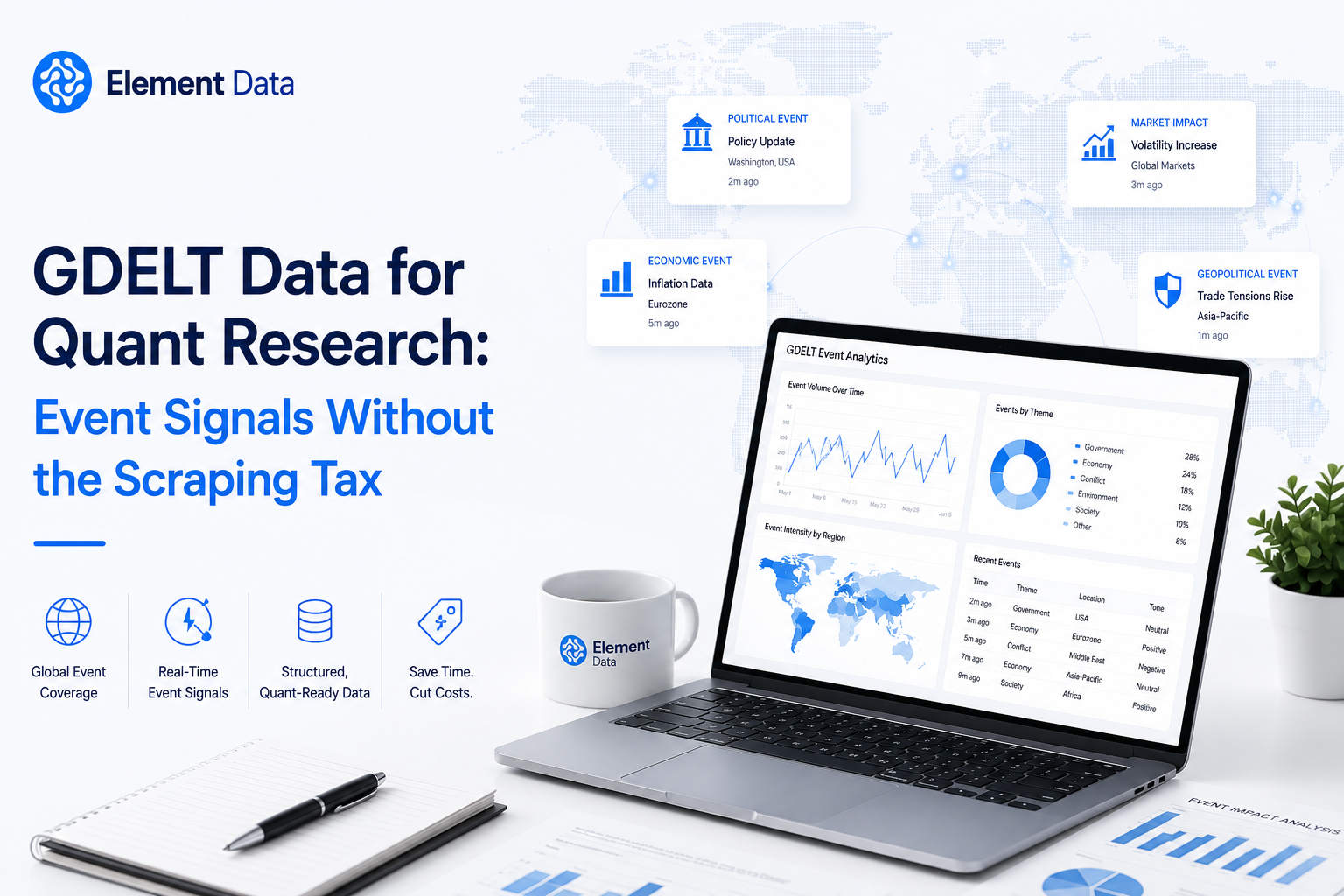
GDELT captures global events, tone shifts, and media coverage across languages and geographies. SEC filings contain insider transactions, 13F holdings, and material disclosures. World Bank and Census data provide macro and demographic context for regional analysis.
The raw versions of these sources are freely available. The operational versions, cleaned, structured, and refreshed on a predictable cadence, are where the value sits.
Read More: Element Data GDELT dataset overview
The Snowflake Advantage for Alternative Data
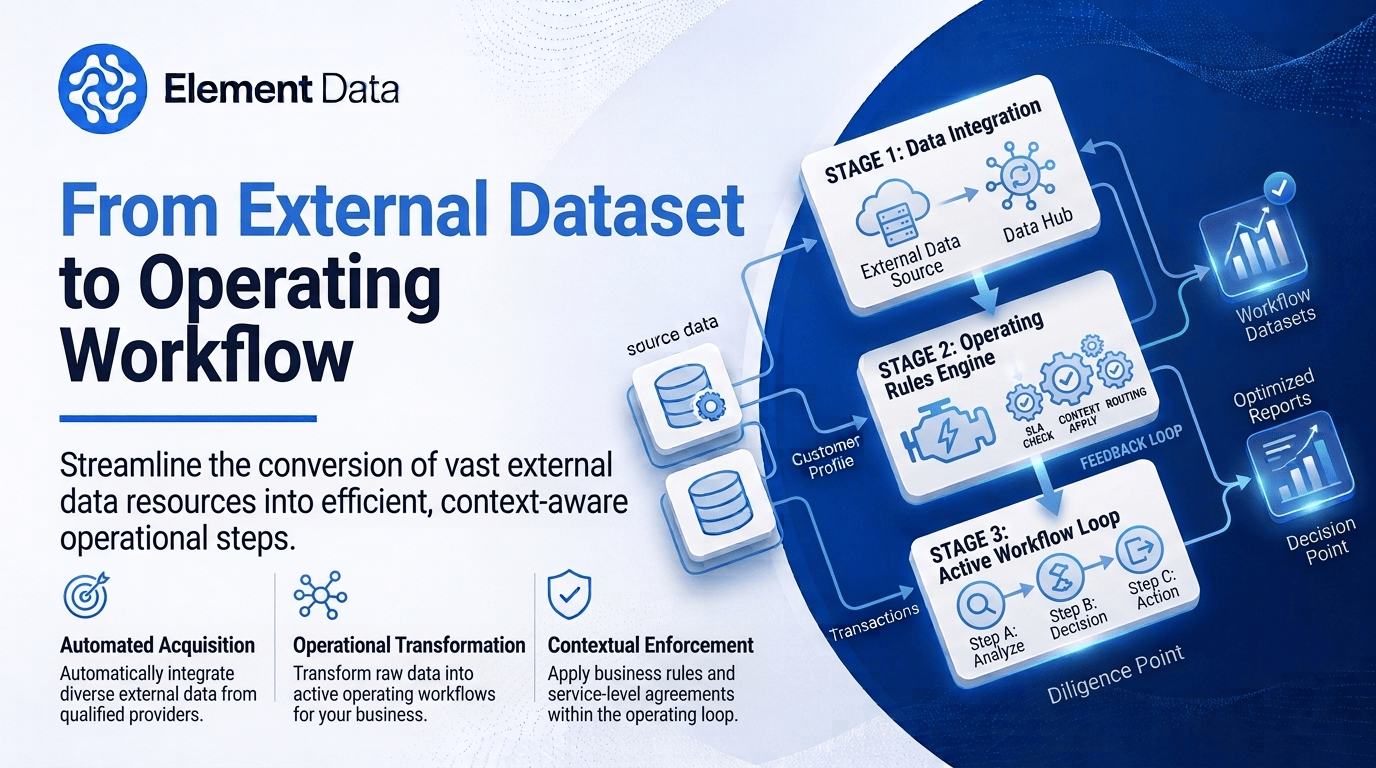
Traditional alt-data procurement works like this: negotiate a contract, receive flat files or API credentials, build an ingestion pipeline, map the schema to internal tables, maintain the pipeline when the source changes.
Snowflake Marketplace changes the model. A research team can access a normalized dataset inside their existing Snowflake environment. No pipeline to build. No files to transfer. No schema mapping before the first query.
For a two-person alt-data team at a hedge fund, this is the difference between spending a quarter building infrastructure and spending a week testing a thesis.
Element Data delivers GDELT, SEC filings, World Bank indicators, and Census data as Snowflake-native shares. The data lands in your environment normalized, current, and joinable to your internal tables.
What This Looks Like in Practice
A macro research analyst wants to test whether media event intensity in specific regions correlates with sector performance. With raw GDELT data, they would spend weeks parsing event codes, normalizing country identifiers, and building a refresh pipeline.
With normalized GDELT in Snowflake, they can join event data to their internal sector mappings in an afternoon and run the backtest before the end of the week.
A quant researcher needs insider transaction data from SEC filings to build a signal. Instead of scraping EDGAR and parsing XML, they query a normalized table that updates on a known cadence.
The edge is not collecting more sources. The edge is turning credible external signals into repeatable research inputs.
Frequently Asked Questions
Where can I find alternative data for investment research on Snowflake?
Element Data provides normalized alternative data sources including GDELT event data, SEC filings, World Bank indicators, and Census demographic data directly on Snowflake Marketplace. These datasets are structured and refreshed, ready to query without building ingestion pipelines.
What types of alternative data are useful for quant research?
The most operationally useful alt data maps to specific investment questions, joins cleanly to securities or macro indicators, and refreshes on a predictable schedule. Public sources like event data, regulatory filings, and demographic data often outperform exotic sources that are difficult to maintain.
How is public data different from paid alternative data?
Paid alternative data typically includes proprietary signals like credit card transactions or geolocation. Public alternative data includes sources like GDELT, SEC filings, and Census data. The raw data is free, but the operational value comes from normalization, schema consistency, and reliable refresh cadence.
Can I access GDELT data in Snowflake without building a pipeline?
Yes. Element Data delivers normalized GDELT data as a Snowflake data share. It lands in your environment ready to query and join to internal tables. No scraper to maintain, no flat files to ingest.
What refresh cadence should I expect for alternative data in Snowflake?
Refresh cadence varies by dataset. Element Data provides clear documentation on update frequency for each source. Predictable refresh schedules allow research teams to build reliable signal pipelines without worrying about stale data.
Request access to alternative data for investment research on Snowflake Marketplace today. See GDELT, SEC filings, and macro indicators in your environment, normalized and ready to query.