Many AI pilots get stuck at the same point. The model works. The dataset is useful. The demo is convincing. But the workflow is not ready.
That gap matters most when external data sits underneath the workflow. A prototype can avoid hard operating questions for a while. Production cannot. Which source wins when fields conflict? What refresh cadence is safe? What confidence level is enough? When does a human review a record? Where does the final decision get stored?
Those questions decide whether an external dataset becomes part of a repeatable workflow or turns into another cleanup project. Healthcare and life sciences teams feel this quickly because the data is valuable, but the edge cases are constant.
Why Useful Datasets Still Stall in Production
A dataset can answer one question well and still fail as workflow infrastructure. That is a common trap in healthcare and life sciences analytics. Clinical trial data can support a strong competitive intelligence demo. Provider data can support a useful matching exercise. CMS data can support a market analysis. None of that proves the data is ready to run inside a repeated process.
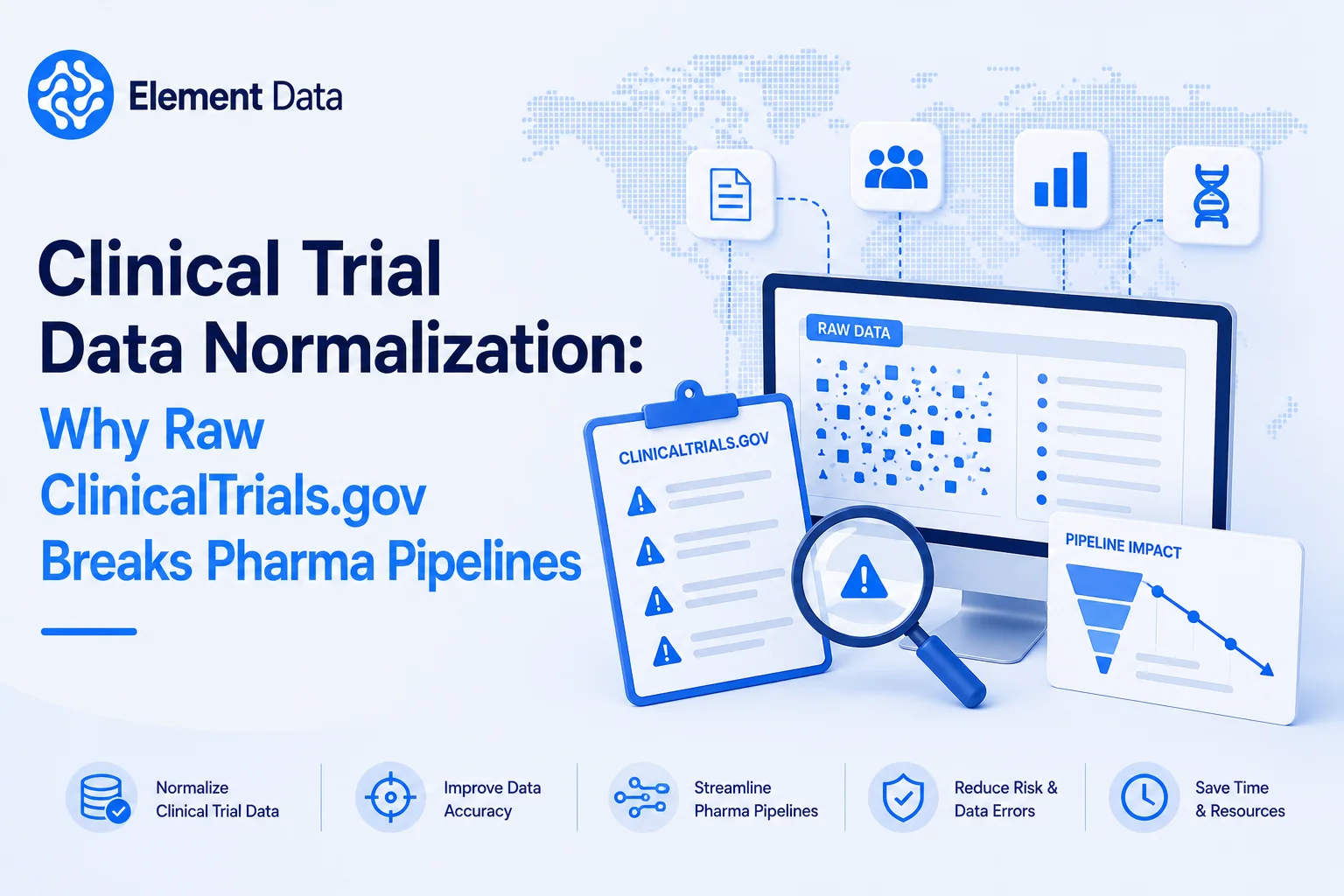
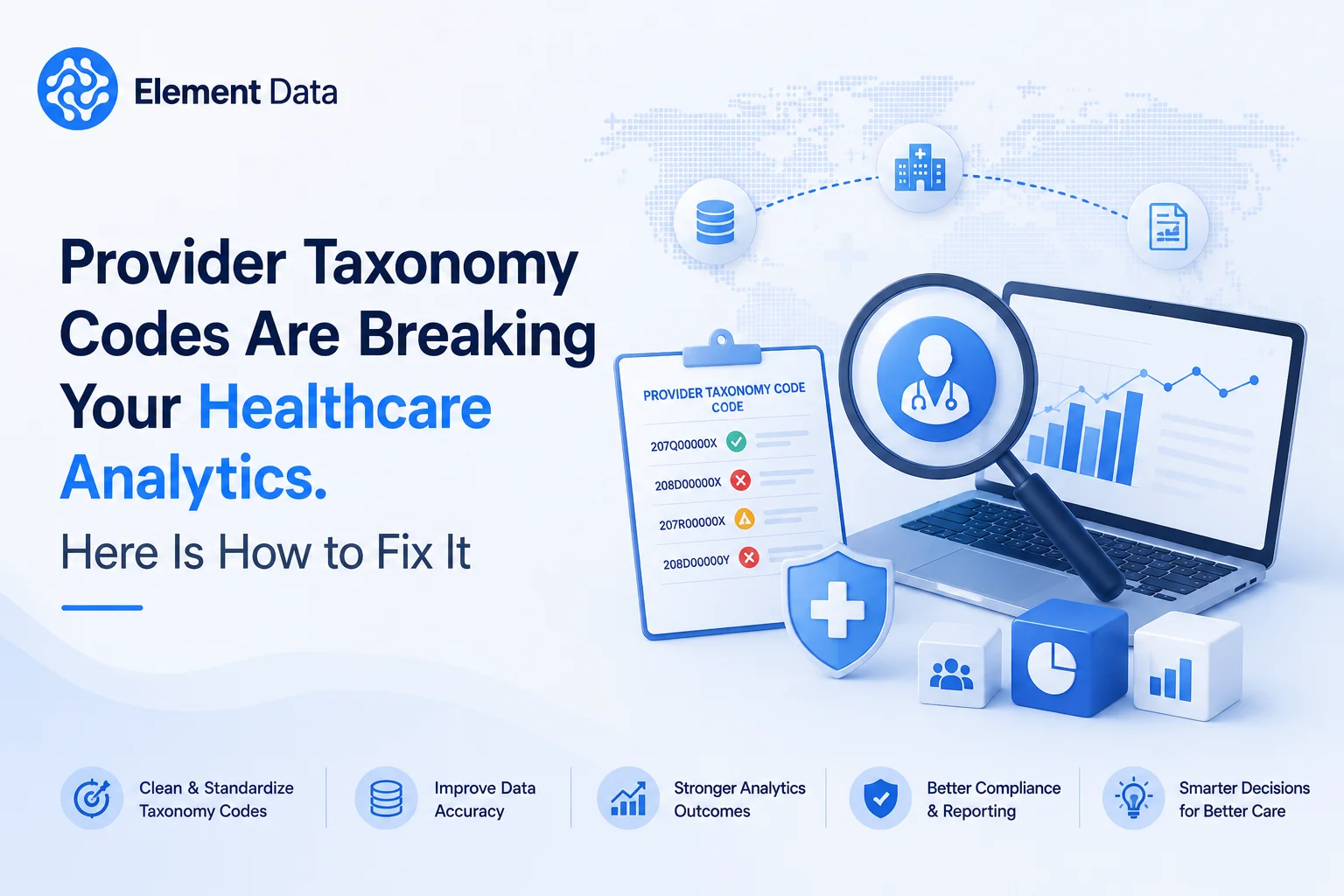
Production asks for consistency. Provider identity changes. Trial records update. CMS files shift. Facility names vary. Sponsor names fragment. Public sources require normalization before they can support decisions. If the workflow does not know how to handle those changes, the burden moves to analysts and engineers.
The result is familiar. The team spends time rebuilding ingestion logic, correcting joins, reviewing exceptions in spreadsheets, and explaining why outputs changed. The AI layer may still look impressive, but the operating workflow becomes fragile because the data foundation was not designed for repeated use.
What an Operating Workflow Needs From External Data
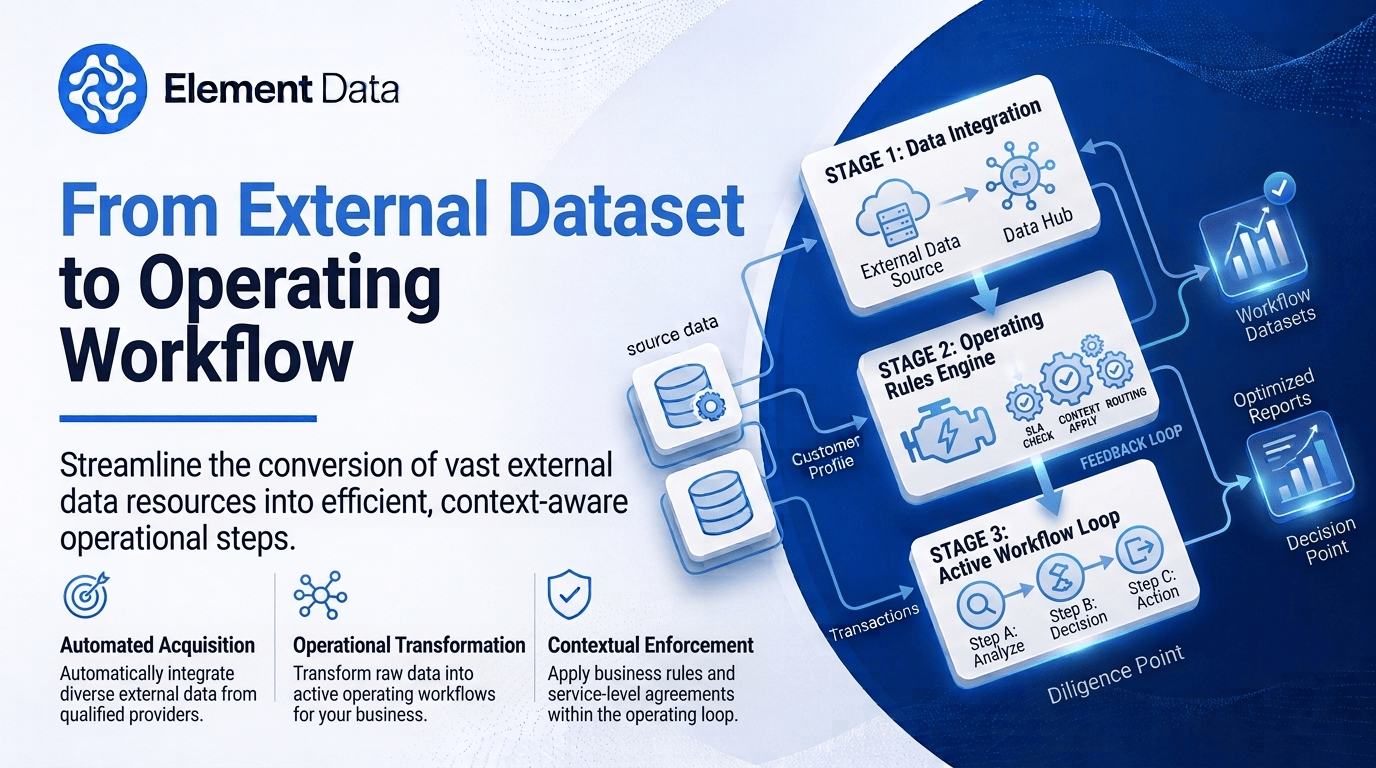
An operating workflow needs more than access to rows. It needs stable structure, clear joins, refresh discipline, confidence rules, and exception handling.
Stable structure matters because downstream logic depends on predictable fields. If schemas shift without warning, dashboards, models, and review processes break. Clear joins matter because external data usually has to connect to internal records, geography, provider identifiers, claims, trial records, account data, or market definitions.
Refresh discipline matters because not every workflow needs the same level of freshness. A monthly refresh may be enough for one analysis and unsafe for another. The right cadence depends on the decision being supported and the cost of stale data.
Confidence rules matter when the workflow has to decide what can move automatically and what needs review. A provider match with weak evidence should not be treated the same as a high-confidence match. A sponsor normalization decision may need review if it affects competitive benchmarking. A CMS-derived field may need context before it supports a business decision.
Exception handling matters because ambiguity will not disappear. Production workflows need to route uncertain records, give reviewers enough context, capture the decision, and write it back so the same issue does not keep returning.
Where Snowflake-Native Delivery Helps
Snowflake-native delivery is an important part of the answer because it puts external data where many teams already run analytics, joins, models, and workflow logic. It reduces the time spent moving files, building ingestion jobs, and maintaining separate refresh processes before the data can be evaluated.
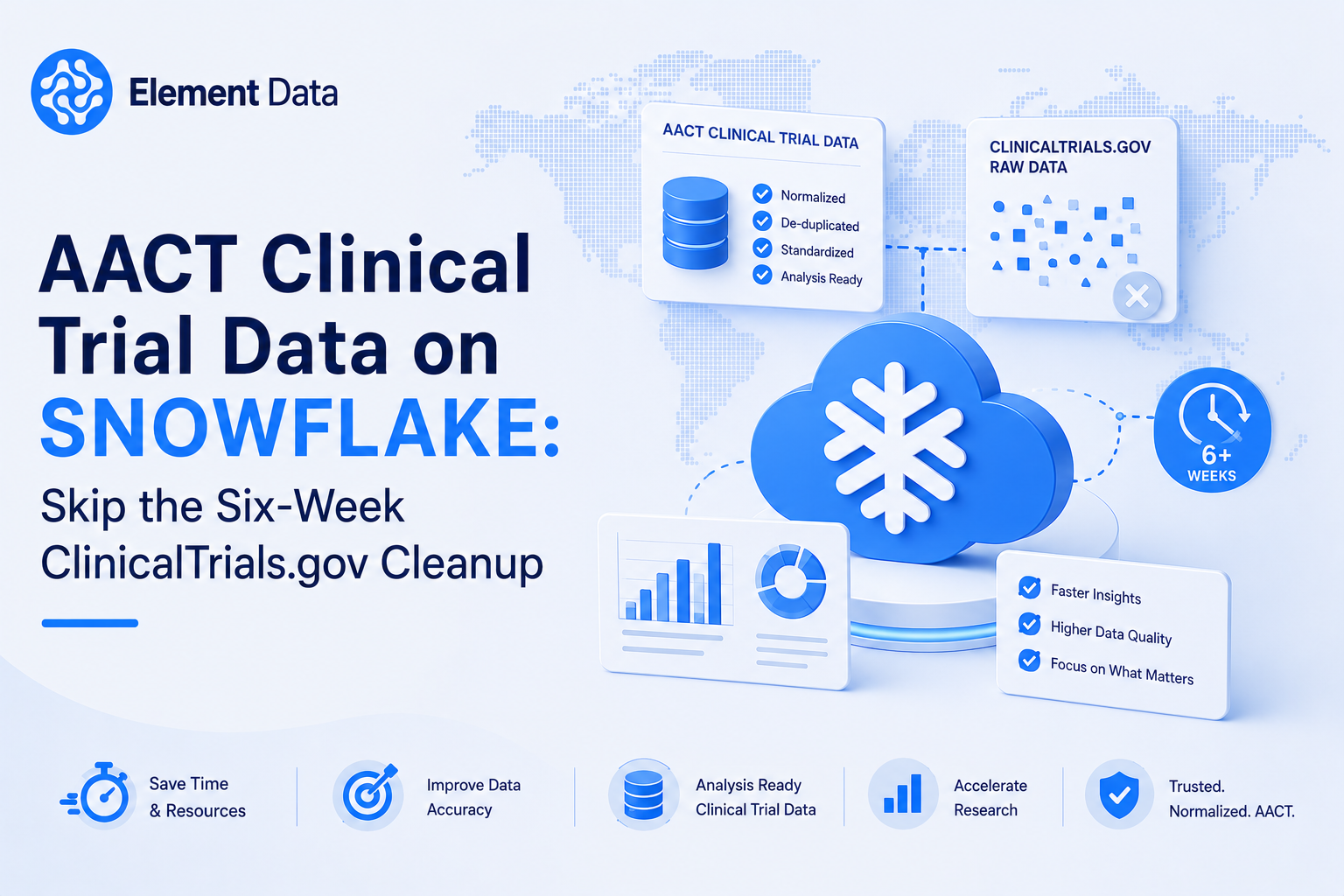
But delivery alone is not enough. A raw file placed in Snowflake can still create a large amount of cleanup work. The value comes when the data is normalized, structured, refreshed predictably, and prepared for practical joins.
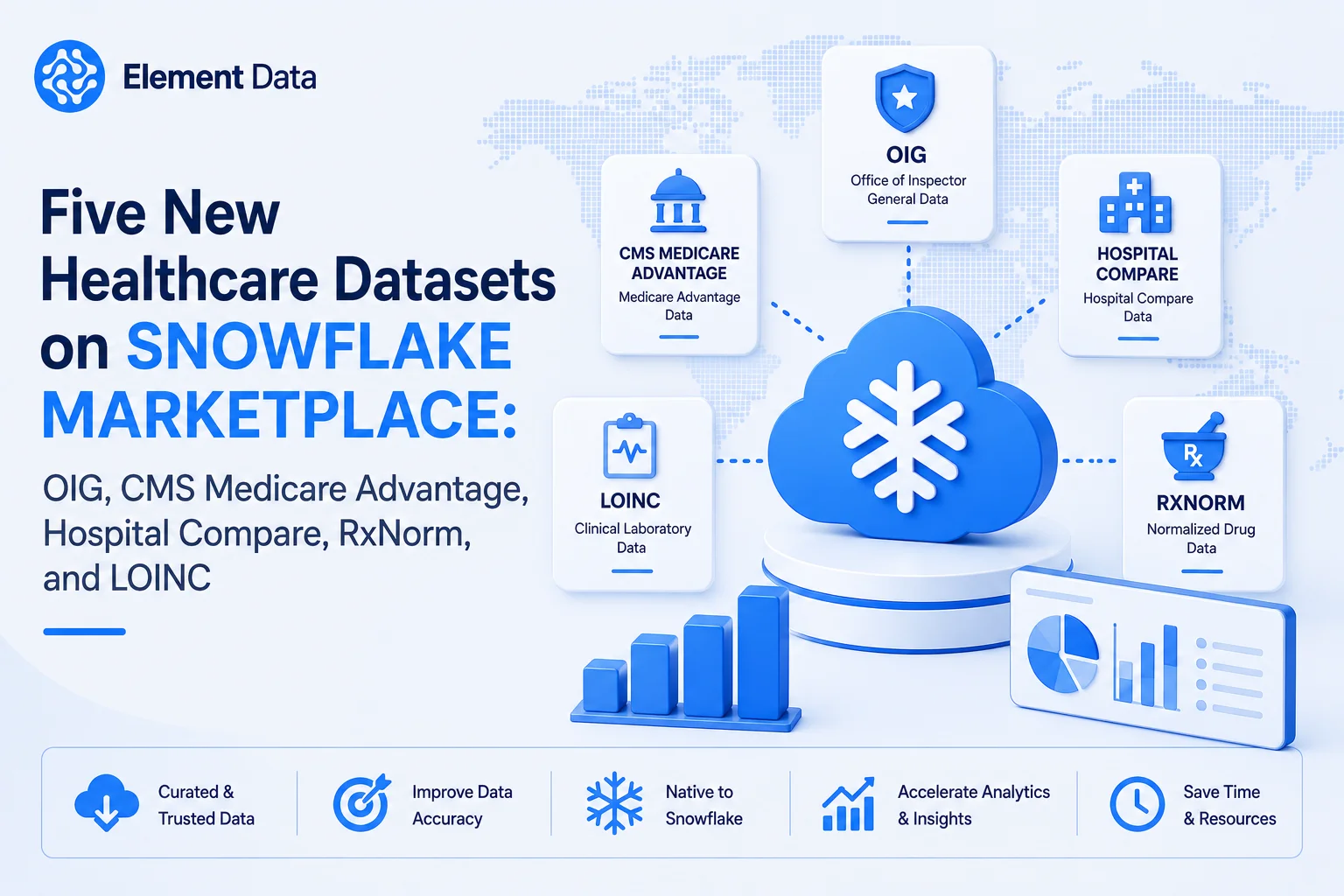
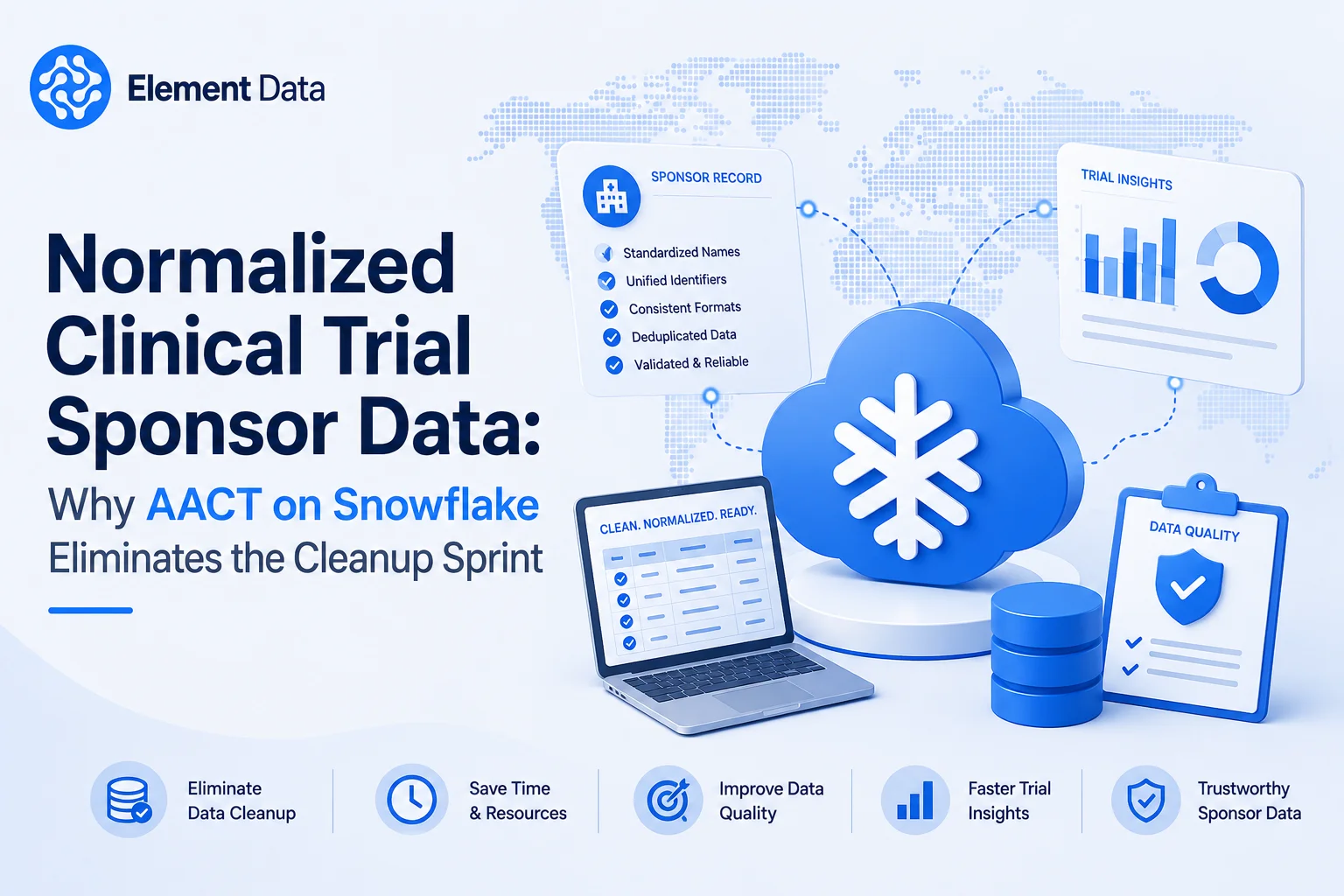
For healthcare and life sciences teams, that can mean normalized provider records, usable NPI joins, clinical trial records with cleaner sponsor and status fields, CMS data prepared for analysis, and public sources shaped for enterprise workflows. The point is not simply to make data available in Snowflake. The point is to make it usable enough that teams can test and operate real workflows on top of it.
Element Data’s wedge is making external datasets operationally usable before teams build analytics or AI on top. That means reducing the pipeline cleanup and data preparation work that often slows teams down before they can learn whether the workflow is viable.
The Workflow Starts With the Data Foundation
AI pilots often focus on the model because the model is visible. Production success usually depends on the less visible parts: source rules, schema stability, refresh cadence, join quality, review paths, and decision storage.
When those pieces are missing, the workflow depends on manual rescue. When they are designed into the data foundation, teams can move from one-off analysis toward repeatable operations.
External data can create real advantage for healthcare and life sciences teams, but only when it behaves like infrastructure. Snowflake-native delivery helps teams get closer to that point. Normalized structure, clear joins, reliable refreshes, and known exception paths are what make the workflow durable.
The workflow starts with the data foundation. If the foundation is not ready, the AI layer inherits the weakness.